BougeRV Rover 2000
Review
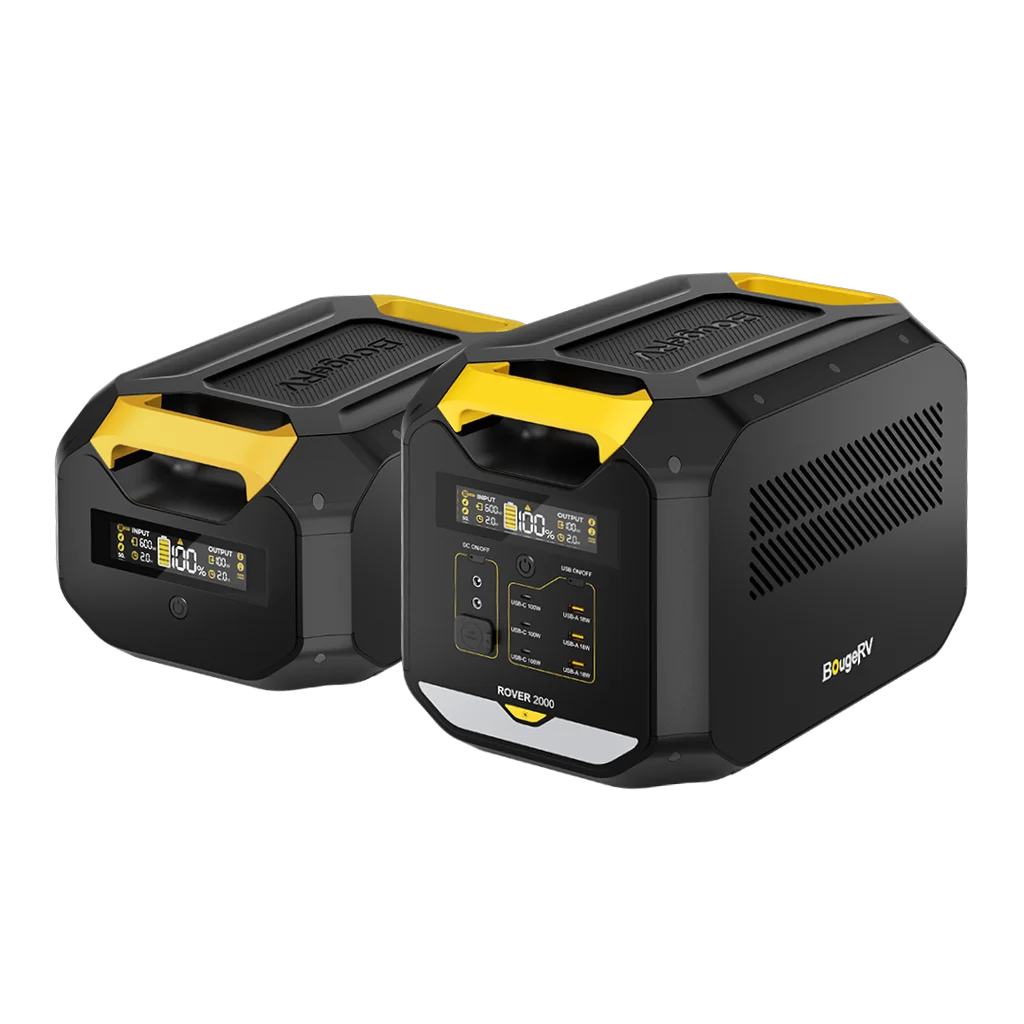
BougeRV Rover 2000 review. 2,008Wh semi-solid state battery, 2,200W output, expandable to 8kWh. A lightweight budget alternative for RV and car camping.
The BougeRV Rover 2000 undercuts EcoFlow and BLUETTI on price while delivering 2,008Wh of capacity and 2,200W output, but the trade-offs are real.
Our Score
Buy the BougeRV Rover 2000
Best prices · Updated hourly
Independent, unsponsored reviews backed by real-world testing. We may earn a commission at no extra cost to you.
How we test →The BougeRV Rover 2000 undercuts EcoFlow and BLUETTI on price while delivering 2,008Wh of capacity and 2,200W output, but the trade-offs are real.
✓ What We Liked
- 2,008Wh capacity at an aggressive price point under $1,000 on sale
- Semi-solid state battery tech — 30% lighter than LiFePO4 competitors
- 1,500W max solar input for rapid off-grid charging
- Expandable up to 8kWh with extra batteries
- 47 lbs — manageable for a 2kWh class unit
✗ What We Didn't
- Semi-solid state battery has fewer cycles (3,000) than LiFePO4 alternatives
- No app control — manual operation only
- Lesser-known brand with smaller service network
- No IP rating for dust/water resistance
BougeRV is not a household name in portable power, and they know it. The Rover 2000 is their argument for why that should change: 2,008Wh of capacity, 2,200W continuous output, expandable to 8kWh, and a street price that regularly dips below $950. That is hundreds less than comparably specced units from EcoFlow or BLUETTI.
Where the Value Is
The headline number is capacity per dollar. At under $1,000 on sale, you are getting more than 2Wh per dollar spent — a ratio that the EcoFlow DELTA 2 Max and BLUETTI AC200MAX cannot match. The 2,200W continuous output with 4,000W surge handles a microwave, a coffee maker, a power drill, or a small window AC unit. For an RV boondocking trip or a food truck setup, this is meaningful power at a budget price.
The semi-solid state battery technology is lighter than traditional LiFePO4. At 47 pounds for a 2kWh-class station, the Rover 2000 is about 10-15% lighter than LiFePO4 competitors. That matters when you are lifting it in and out of a truck bed. Solar input maxes at 1,500W, which is outstanding — you can pair it with multiple panels and recharge quickly off-grid.
Expandability is the sleeper feature. You can chain extra batteries to reach 8,032Wh, turning a portable station into a legitimate small off-grid power system. Not many budget stations offer this.
The Trade-Offs
No app control is the biggest daily annoyance. Every setting is manual, every status check requires walking over to the unit. In 2026, this feels like an oversight for a $1,000+ product. The EcoFlow DELTA 2 Max gives you full Bluetooth and WiFi control at a similar price point.
The semi-solid state battery chemistry is rated for 3,000 cycles, which sounds fine until you compare it to LiFePO4 units getting 3,500 to 6,000 cycles. That is a shorter lifespan, and it matters for a product you expect to use for a decade. BougeRV’s brand is also less established, meaning smaller support network, fewer accessories, and less community knowledge if something goes wrong.
The 2-year warranty gap is notable — most competitors in this class offer five years.
Who Should Buy It
Buy the Rover 2000 if you want maximum watt-hours per dollar and can live without app control. It is ideal for budget-conscious RV owners, car campers who need real power, and anyone building a first off-grid setup without spending $2,000.
Skip it if brand reputation, long-term battery longevity, or app-based monitoring matter to you. If you can stretch your budget to $1,400, the EcoFlow DELTA 2 Max gives you LiFePO4 chemistry, app control, and a deeper ecosystem. But if the budget is firm, the Rover 2000 delivers more power per dollar than anything else on the market right now.
Shop
Ready to buy the BougeRV Rover 2000?
Check the latest price and availability.
Check Price on Amazon