LiTime 200Ah Plus 12V LiFePO4 vs Renogy 100Ah 12V LiFePO4
LiTime 200Ah Plus 12V LiFePO4 (200Ah) vs Renogy 100Ah 12V LiFePO4 (100Ah) compared spec-by-spec. Cycle life, BMS, pricing, pros, cons, and our verdict on which off-grid battery to buy.
| Specification | ||
|---|---|---|
| Capacity Ah | 200 | 100 |
| Voltage | 12 | 12 |
| Energy Wh | 2,560 | 1,280 |
| Battery Type | LiFePO4 | LiFePO4 |
| Cycle Life | 4,000 cycles | 4,000 cycles |
| Weight | 52.9 lbs | 26 lbs ✓ Winner |
| Dimensions | 20.5 x 8.1 x 9.4 in | 11.4 x 6.8 x 7.4 in |
| Bms Included | Yes | Yes |
| Max Continuous Discharge A | 200 | 100 |
| Max Charge Rate A | 100 | 50 |
| Cold Temp Cutoff | 32F (0C) | 32F (0C) |
| Operating Temp | 32-131F | 32-131F |
| Series Parallel | Yes | Yes |
| Bluetooth Monitoring | Yes | — |
| Ip Rating | IP65 | IP65 |
| Warranty | 5 years | 5 years |
Buy the LiTime 200Ah Plus 12V LiFePO4
Best prices · Updated hourly
Buy the Renogy 100Ah 12V LiFePO4
Best prices · Updated hourly
Who Should Buy the LiTime 200Ah Plus 12V LiFePO4?
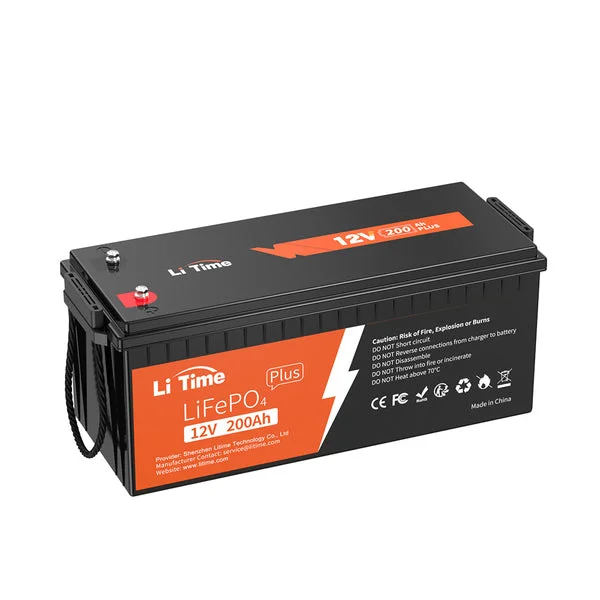
The LiTime 200Ah Plus 12V LiFePO4 is built for rv house battery, off grid cabin bank, under 500. Its 200Ah at 12V gives you 2.4kWh of usable energy — enough for a full off-grid battery bank.
Key advantages include: 200a bms handles high-draw appliances without tripping; built-in bluetooth monitoring via smartphone app; 4,000 cycle life at 100% dod — over 10 years of daily use. At 52.9 lbs, plan for a two-person install or lifting equipment.
Priced at $460, the LiTime 200Ah Plus 12V LiFePO4 scores 8.6/10 overall — a strong showing across the board.
Who Should Buy the Renogy 100Ah 12V LiFePO4?
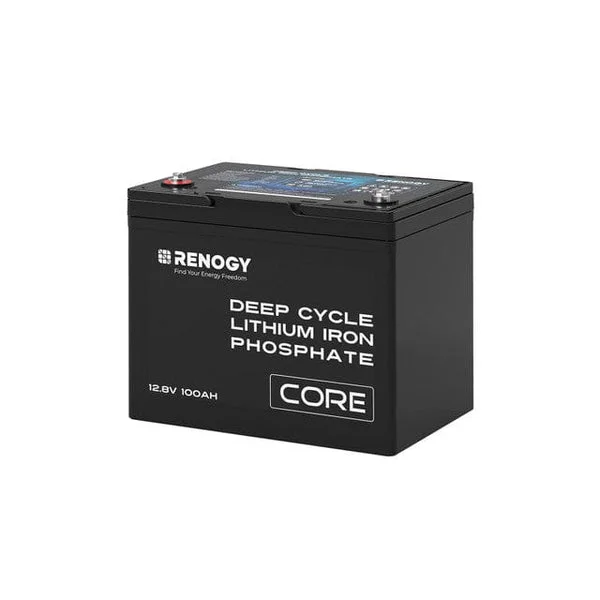
The Renogy 100Ah 12V LiFePO4 is built for rv house battery, off grid cabin bank, marine. Its 100Ah at 12V gives you 1.2kWh of usable energy — suitable for a standalone house battery or small bank.
Key advantages include: ip65 waterproof rating — rare for this price range; built-in bluetooth monitoring via renogy dc home app; trusted renogy ecosystem integrates with their solar controllers. At 26 lbs, it's manageable for a one-person install.
Priced at $280, the Renogy 100Ah 12V LiFePO4 scores 8.4/10 overall — a strong showing across the board.
How Do the Specs Compare?
Capacity: The LiTime 200Ah Plus 12V LiFePO4 offers more amp-hours at 200Ah vs 100Ah for the Renogy 100Ah 12V LiFePO4. More Ah means more runtime before hitting the safe depth-of-discharge floor — critical for overnight draws and cloudy multi-day stretches.
Chemistry: Both batteries use LiFePO4 chemistry, so cycle life and thermal stability are in the same ballpark — the specs and price become the main differentiators.
Cycle life: The LiTime 200Ah Plus 12V LiFePO4 is rated for 4,000 cycles versus 4,000 for the Renogy 100Ah 12V LiFePO4. At one full cycle per day, that's roughly 11 vs 11 years of daily use — a real long-term cost consideration.
Weight: The Renogy 100Ah 12V LiFePO4 weighs 26 lbs vs 52.9 lbs for the LiTime 200Ah Plus 12V LiFePO4. That's a meaningful difference for installations requiring frequent repositioning or weight-sensitive applications like marine or RV.
Price: The Renogy 100Ah 12V LiFePO4 costs $280 versus $460 for the LiTime 200Ah Plus 12V LiFePO4 — a $180 difference. For long-term value, divide the price by the rated cycle life to get a true cost-per-cycle comparison.
🏆 Our Verdict
Choose the LiTime 200Ah Plus 12V LiFePO4 if you need maximum capacity (200Ah vs 100Ah) and longer cycle life (4,000 cycles).
Choose the Renogy 100Ah 12V LiFePO4 if you prioritize value (typically $180 less) , portability (26 lbs vs 52.9 lbs) .
Our Take: LiTime 200Ah Plus 12V LiFePO4 vs Renogy 100Ah 12V LiFePO4
Short answer: These two aren’t a direct match-up — one is 200Ah, one is 100Ah. Choose the LiTime 200Ah Plus if you want the most amp-hours per dollar and don’t care about a broader ecosystem. Choose the Renogy 100Ah LiFePO4 if you’re already using Renogy solar panels, charge controllers, or inverters and want everything to talk over their integrated BMS.
This isn’t really apples-to-apples
A lot of buyers search “LiTime 200Ah vs Renogy 100Ah” because those are the two most common lithium battery sizes in RV and DIY solar Amazon listings. But they’re different capacities, so cost-per-Ah or cost-per-Wh is the only fair comparison.
Cost per Ah (at typical sale prices):
- LiTime 200Ah Plus: $460 ÷ 200Ah = $2.30/Ah
- Renogy 100Ah: $550 ÷ 100Ah = $5.50/Ah
The LiTime is less than half the per-Ah cost. For pure battery value, this isn’t close.
Where the LiTime 200Ah Plus wins
Per-Ah price. Already covered — the LiTime is roughly 2.4× cheaper per amp-hour. If you’re building a bank for an RV or cabin and just need raw capacity, the LiTime dominates.
Bluetooth monitoring. The 200Ah Plus includes a built-in Bluetooth BMS. You can watch state-of-charge, individual cell voltages, cycle count, and temperature from your phone. Renogy’s 100Ah has optional Bluetooth via an external module — it’s not included in the base battery.
200A continuous BMS. The LiTime’s BMS handles 200A continuous draw and 400A peak. For an RV running a 3,000W inverter at full load (roughly 250A at 12V), the LiTime’s BMS can handle full inverter output briefly without tripping. Renogy’s 100Ah has a 100A BMS — too small for any inverter over 1,200W.
Higher rated cycle life. LiTime rates the 200Ah Plus at 4,000 cycles to 80% capacity. Renogy rates the 100Ah at 2,000 cycles — a notable gap. Both use LiFePO4 chemistry, so the difference is about BMS management and thermal design.
Where the Renogy 100Ah wins
Ecosystem integration. If you’re running a Renogy Rover MPPT charge controller, a Renogy inverter, and Renogy solar panels, the 100Ah LiFePO4 talks to your charge controller over Renogy’s proprietary communication protocol. You get coordinated charge profiles, temperature-compensated charging, and low-temp cutoffs that all play together.
Lighter for the same form factor. At 26 lbs, the Renogy 100Ah is a plug-and-play drop-in for Group 24 and Group 27 battery boxes. The LiTime 200Ah Plus is 53 lbs and needs a custom mount.
US-based support. Renogy’s warranty claims and technical support run out of Ontario, CA with US business hours. LiTime support is China-based with slower response times. For a daily-use battery in a remote cabin, this can matter.
Real-world winner by scenario
- Van build or RV with moderate loads: LiTime 200Ah Plus. The BMS headroom and Bluetooth alone justify it.
- Small trailer, bass boat, or off-grid shed with under 1kW inverter: Renogy 100Ah. Right-sized for the load.
- DIY 48V battery bank: LiTime. The price-per-Ah matters more when you’re buying 4–8 batteries.
- Existing Renogy ecosystem: Renogy 100Ah. Don’t fragment your system.
- Marine / IP65 installations: LiTime 200Ah Plus (IP65 rated). Renogy 100Ah is not rated for direct water exposure.
Chemistry, cycle life, and daily use
Both batteries use LiFePO4 cells with integrated BMS protection. Both can discharge to 100% DoD regularly without significant capacity degradation. Both handle 12V applications natively. The chemistry is the same; the BMS implementation and communication protocols are where the differences live.
For a 10-year ownership horizon cycling daily:
- LiTime 200Ah Plus: ~4,000 cycles at 100% DoD = 11 years of daily use
- Renogy 100Ah: ~2,000 cycles at 100% DoD = 5.5 years of daily use
Double the cycle life is a significant total-cost-of-ownership advantage for the LiTime. Over a decade, you’d replace the Renogy once and the LiTime zero times.
Our recommendation
For raw battery value, the LiTime 200Ah Plus is the clear winner. Double the capacity, 2× the BMS headroom, longer rated cycle life, Bluetooth included, and still cheaper than the Renogy 100Ah.
Choose the Renogy 100Ah LiFePO4 if you’re already running a Renogy solar system and want everything in the ecosystem to coordinate via the shared communication bus, or if you need a direct drop-in replacement for a Group 24/27 lead-acid battery in an existing tight mount.
Related
Go Deeper
More Comparisons