Esc

Best Foldable Solar Panels of 2026

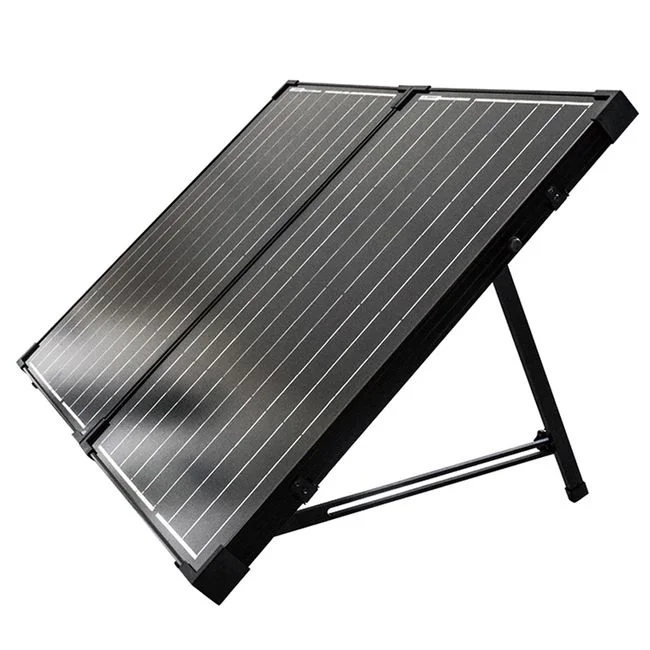
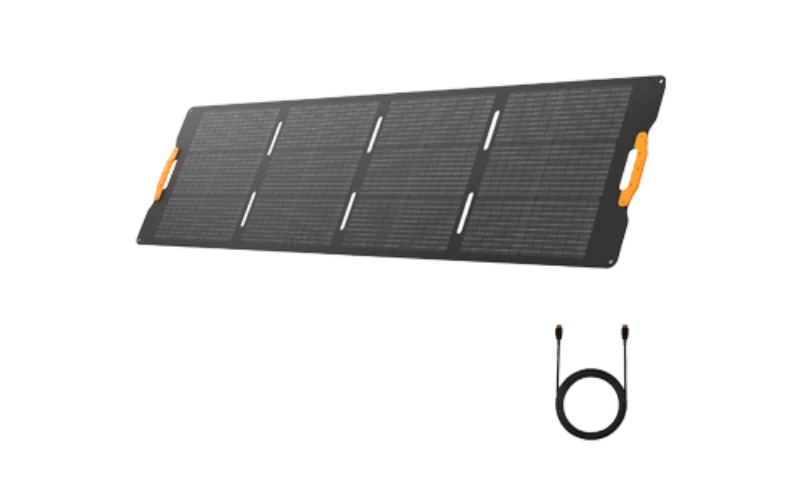
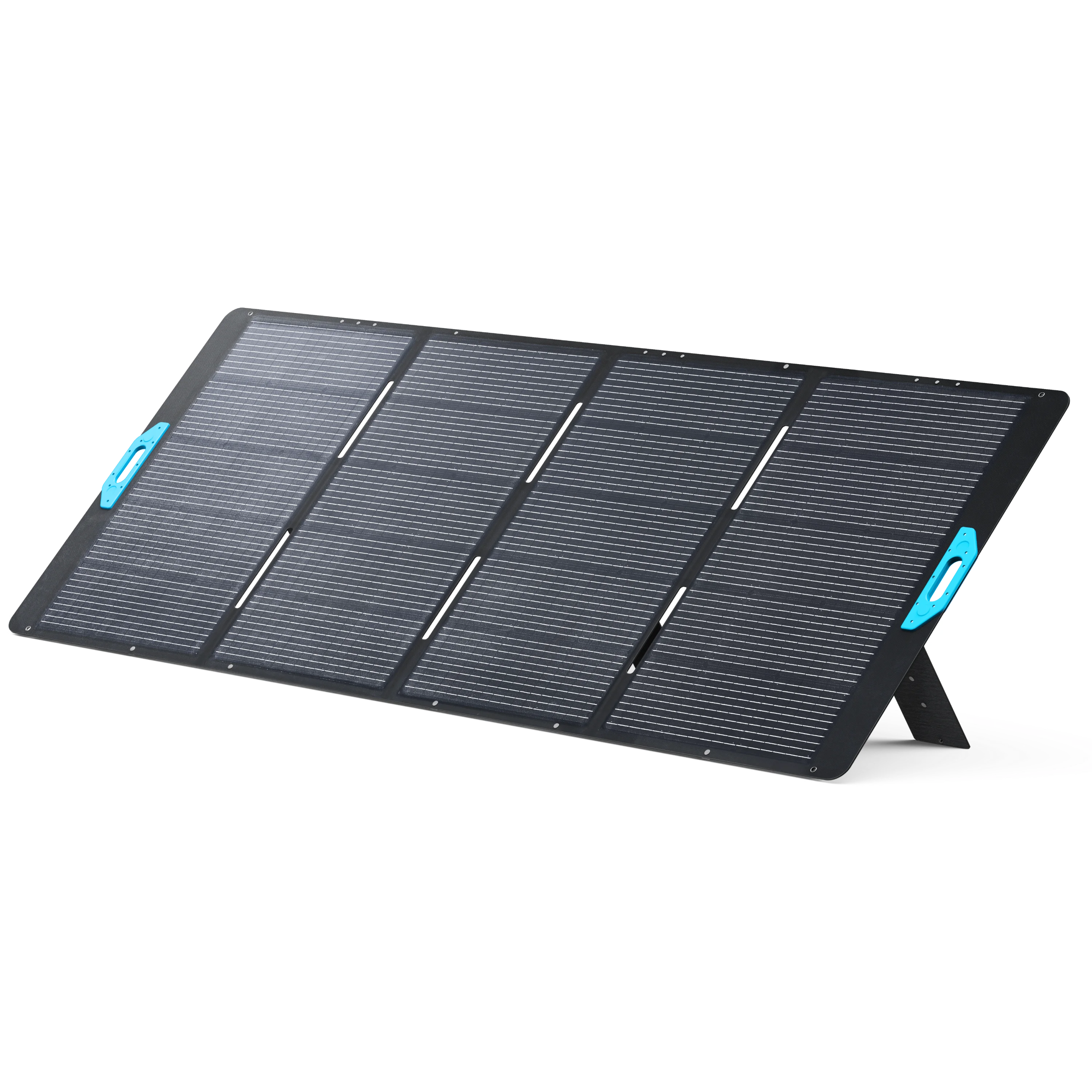
Foldable portable solar panels collapse to briefcase-size for transport and unfold to deliver 60W–400W of clean solar power anywhere you can find sunlight. Below: our ranked top picks, followed by how portable solar works and who should choose it.

Top 5 Foldable & Portable Solar Panels of 2026

Ranked by overall score from our independent testing methodology. Click any card for the full review.
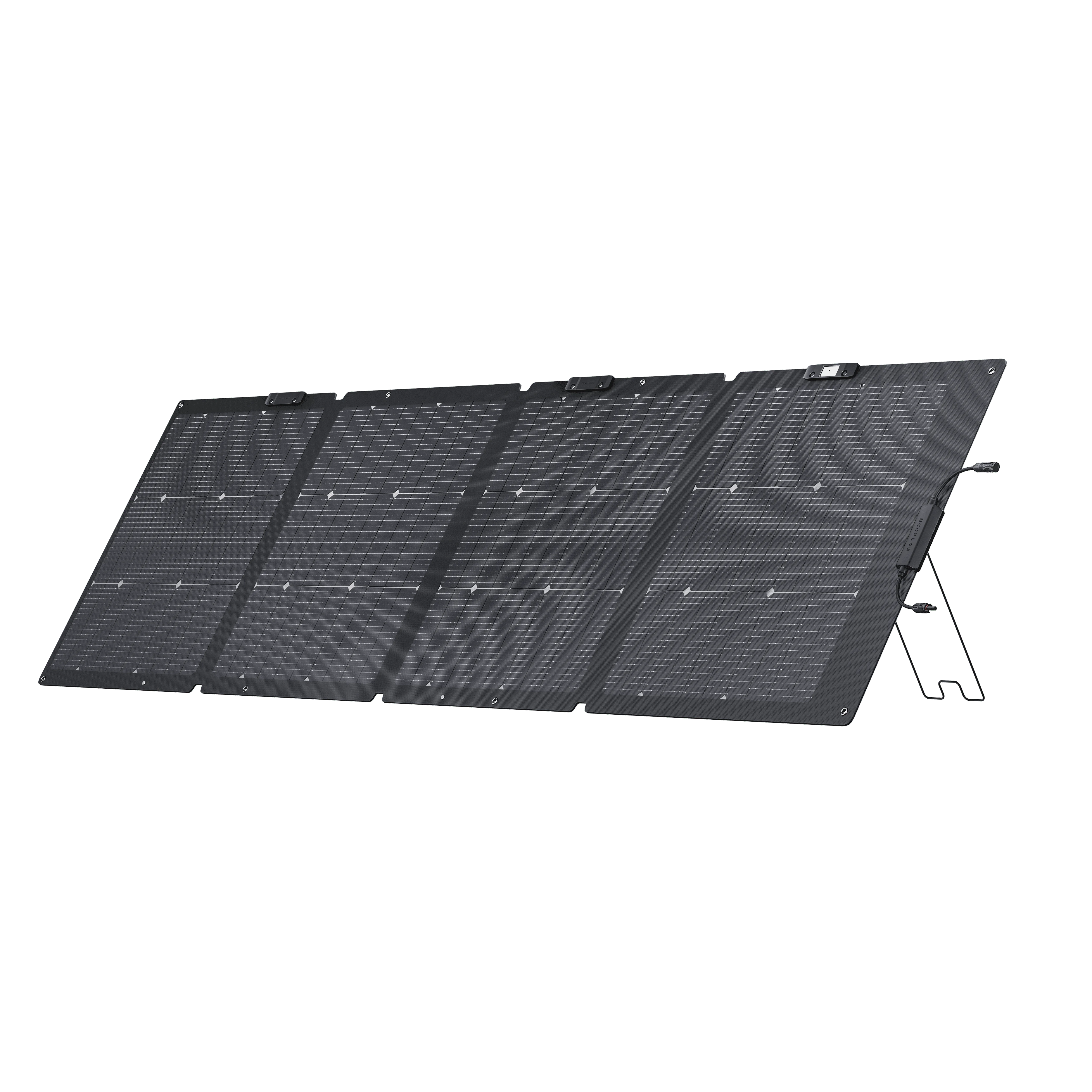
Foldable & Portable Solar Panels Head-to-Head

SpecAnker SOLIX PS400BLUETTI PV420 Foldable Solar PanelEcoFlow 220W Bifacial Portable Solar PanelRenogy 100W 12V Foldable Solar PanelJackery SolarSaga 200W
Our Score8.6/108.5/108.4/108.4/108.3/10
Price $549 $699 $399 $150 $399
Wattage400W420W220W100W200W
Cell Typemonocrystallinemonocrystallinemonocrystalline bifacialmonocrystallinemonocrystalline
Efficiency23%23.4%23%22%24.3%
Weight32 lbs30.6 lbs20.9 lbs11.6 lbs17.6 lbs
ConnectorMC4MC4MC4MC4Anderson
FoldableYesYesYesYesYes
Warranty5 yr2 yr1 yr2 yr3 yr

How Foldable Solar Panels Work

Foldable solar panels use photovoltaic cells — typically monocrystalline silicon — laminated onto a flexible or semi-rigid substrate and enclosed in durable fabric or polymer housing with hinged sections. When sunlight hits the cells, photons knock electrons loose from silicon atoms, creating direct current (DC) electricity.

The panels include a junction box that consolidates the output from multiple cell sections and provides standardized connectors — usually MC4, XT60, or Anderson PowerPole. Some panels include a built-in USB output for direct device charging. For power station charging, the DC output connects to the station's solar input port.

The power station's built-in MPPT (Maximum Power Point Tracking) charge controller optimizes the voltage and current from the panel to maximize charging efficiency. MPPT controllers can recover 20 to 30 percent more energy than basic PWM controllers, especially in variable cloud conditions. Read our MPPT primer for details.

Who Foldable Portable Panels Are Best For

  • Car campers and overlanders — Set up panels at your campsite to charge a portable power station during the day. See our camping & overlanding guide.
  • RV boondockers — Supplement roof-mounted panels or serve as your primary solar source. See our best RV solar guide.
  • Vanlifers and nomads — Foldable panels avoid permanent roof modifications. Ideal for rental vans, stealth camping setups, or anyone who wants solar without a permanent installation commitment.
  • Emergency preparedness — Store a foldable panel in your garage and deploy it during power outages. Paired with a power station, it creates an indefinitely renewable energy source that does not depend on fuel.

Related

Frequently Asked Questions

How many watts of portable solar do I need for camping?
For basic phone and device charging, a 60 to 100 watt panel is sufficient. For charging a portable power station (500-1,000Wh), aim for 100 to 200 watts for reasonable daytime recharge times. For larger power stations or running a 12V fridge, 200 to 400 watts of total solar input is recommended. You can combine multiple panels for higher wattage.
What is the difference between monocrystalline and polycrystalline portable panels?
Monocrystalline panels are more efficient (20-24% conversion) and perform better in low light and partial shade. Polycrystalline panels are slightly cheaper but less efficient (15-18%) and larger for the same wattage. Nearly all quality portable panels today use monocrystalline cells because the efficiency advantage justifies the modest cost difference at this scale.
Can I charge my portable power station with a foldable solar panel?
Yes. Most portable power stations accept solar input via an XT60, MC4, or Anderson connector. Match the panel output voltage and wattage to your power station solar input specs. For example, an EcoFlow DELTA 2 accepts 11-60V input at up to 500W, so you could connect two 250W panels in parallel. Always check the voltage and wattage limits in your power station manual.
Are foldable solar panels waterproof?
Most quality foldable panels carry an IP65 or IP67 rating, which means they tolerate rain and splashes but should not be submerged. The junction boxes and connectors are typically the weakest point — check that they have rubber seals or covers. Even IP65 panels should be packed up during heavy storms, and never leave connectors exposed in standing water.