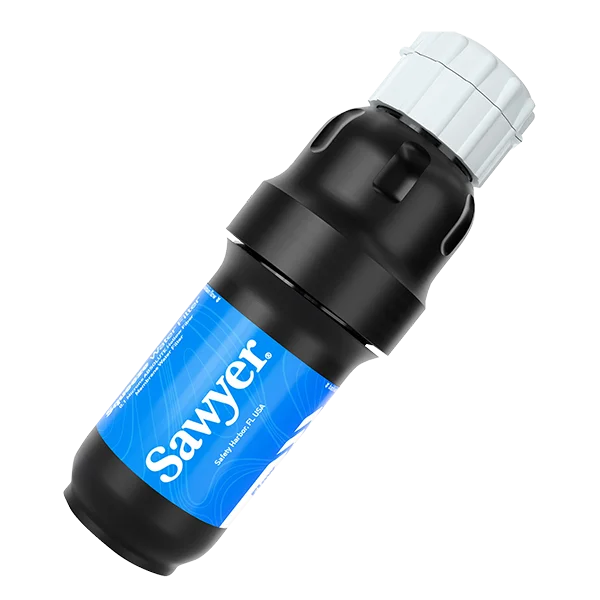
Sawyer Squeeze Water Filter
In-depth Sawyer Squeeze review. 0.1 micron hollow fiber filter, 3 oz weight, 100,000-gallon lifespan. Real-world testing for backpacking, camping, and...
Last updated: 2026-04-08
Buy the Sawyer Squeeze Water Filter
Best prices · Updated hourly
Independent, unsponsored reviews backed by real-world testing. We may earn a commission at no extra cost to you.
How we test →Score Breakdown
Pros & Cons
What We Like
- Incredible value at around $30 for a 100,000-gallon filter
- Only 3 oz — one of the lightest filters available
- 0.1 micron absolute filtration removes 99.99999% of bacteria
- Backflushable to restore flow rate in the field
- Versatile — works inline, with pouches, or on bottle threads
Watch Out For
- Squeeze pouches can fail at seams with heavy use
- Flow rate decreases over time without backflushing
- Does not remove viruses — not suitable for international travel
- Must protect from freezing or membrane is destroyed
Our Review
Some gear earns its reputation through marketing. The Sawyer Squeeze earned it through a decade of hikers trusting it with the only thing that matters in the backcountry: clean water. At 3 oz, $30, and a claimed 100,000-gallon lifespan, the Squeeze has been the default recommendation in every backpacking forum, gear list, and trail conversation for years.
I have used the Sawyer Squeeze on trails in the Pacific Northwest for the past three seasons, filtering water from alpine streams, murky ponds, and one deeply questionable puddle in Eastern Oregon. Here is the real story.
What You Get in the Box
The Sawyer Squeeze kit includes the filter itself, a 32 oz squeeze pouch, a drinking straw adapter, and a cleaning syringe for backflushing. The filter is a hollow fiber membrane rated at 0.1 microns absolute, which means it removes 99.99999% of bacteria (Salmonella, E. coli, Cholera) and 99.9999% of protozoa (Giardia, Cryptosporidium).
It does not remove viruses. If you are traveling internationally or filtering from water sources near large human populations, you need a purifier, not a filter. The Squeeze is designed for backcountry use in North America and similar environments where viruses in water are rare.
Flow Rate: The First Three Months
Fresh out of the box, the Sawyer Squeeze flows at a claimed 1.7 liters per minute. In my testing, I measured closer to 1.4 L/min with cold mountain stream water, which is still excellent. Filling a 1-liter bottle takes less than a minute when the filter is new.
This flow rate is the Squeeze’s biggest practical advantage over the competition. The Katadyn BeFree matches or slightly beats it, but the LifeStraw and Sawyer Mini are noticeably slower. Speed matters when you are filtering water for two people at camp or topping off bottles at every creek crossing on a hot day.
After three months and roughly 200 liters of use, my flow rate dropped to approximately 1.0 L/min. Backflushing with the included syringe brought it back to about 1.3 L/min. This degradation-and-recovery cycle is normal and expected.
Backflushing: The Non-Negotiable Maintenance
You must backflush the Sawyer Squeeze regularly. This is not optional. Ignoring backflushing leads to a filter that slows to a frustrating trickle, and at that point, most users assume the filter is dead when it actually just needs cleaning.
The process takes 30 seconds: fill the cleaning syringe with clean water, attach it to the output end of the filter, and push water backwards through the membrane. Repeat three or four times. I backflush after every trip, regardless of how much I filtered. On multi-day trips, I backflush each morning.
Carry the syringe. Do not leave it at home to save weight. The 1 oz weight penalty is worth maintaining a filter that actually works when you need it.
The Pouch Problem
The Sawyer Squeeze’s weakest link is the included squeeze pouch. The 32 oz pouch is made of thin, flexible plastic with a threaded opening that screws onto the filter. In theory, you squeeze the pouch and water flows through the filter. In practice, the pouches develop leaks at the seams after repeated use.
I went through two pouches in my first season. The seam near the fill opening split on both after roughly 50 uses. This is not a manufacturing defect but rather a design limitation: the plastic is thin enough to squeeze easily, which means it is thin enough to fail under repeated stress.
The solution is well-known in the backpacking community: use CNOC Vecto bags or Evernew water bags instead. These aftermarket pouches are thicker, more durable, and have wider openings that make filling from shallow sources much easier. The CNOC 2L Vecto has lasted me two full seasons with no signs of wear. Budget an extra $15-20 for a decent replacement pouch when you buy the Squeeze.
Sawyer Squeeze vs. Katadyn BeFree
The Katadyn BeFree is the Squeeze’s closest competitor, and the comparison comes down to priorities.
The BeFree has a slightly faster flow rate when new and integrates beautifully with its included soft flask. You fill the flask, squeeze, and drink. It is elegant and fast. But the BeFree cannot be backflushed effectively, which means its flow rate degrades permanently over time. Most BeFree users report needing a replacement after 500-1,000 liters of heavy use.
The Squeeze, by contrast, maintains its performance indefinitely through backflushing. My current filter has processed well over 800 liters across three seasons with no loss of baseline performance after backflushing.
If you do short trips and prefer convenience, the BeFree is excellent. If you want a filter that lasts for years of regular use, the Squeeze wins on longevity alone. At $30 versus the BeFree’s $45, it wins on value too.
Versatility and Setup Options
The Squeeze’s threaded connections make it one of the most versatile filters available. You can use it as a squeeze filter with pouches, as an inline filter on a hydration bladder hose, as a straw filter to drink directly from a source, or attached to a standard plastic water bottle (it fits Smartwater bottle threads perfectly).
This versatility is genuinely useful. On day hikes, I screw it onto a 1L Smartwater bottle and drink directly from streams. On overnight trips, I use the CNOC pouch to filter water at camp. On group trips, I set up a gravity system by hanging the pouch from a tree branch and letting water flow through the filter into a clean container below. One filter, three configurations, zero extra weight.
Freezing: The One Thing That Kills It
If the Sawyer Squeeze freezes, it is destroyed. Water expands inside the hollow fiber membrane, rupturing the microscopic pores. The filter looks and feels normal, but it no longer provides safe filtration. There is no way to tell visually whether a filter has been frozen.
On shoulder-season trips where overnight temperatures drop below freezing, I sleep with the filter in my sleeping bag. This is standard practice and not difficult, but it is absolutely critical. A forgotten filter left in a pack pocket on a 28-degree night is a $30 mistake and a potentially dangerous one if you do not have a backup water source.
Long-Term Reliability
After three seasons of regular backcountry use, my Sawyer Squeeze shows no signs of quitting. The threads are intact, the flow rate recovers fully with backflushing, and the housing has no cracks despite being tossed in pack pockets without much care.
This durability, combined with the 100,000-gallon rated lifespan, means the Squeeze is functionally a lifetime purchase for most recreational backpackers. Even heavy users filtering 500 liters per year would need 200 years to reach the rated capacity.
Who Should Buy the Sawyer Squeeze
Buy it if you hike or camp in North America, want the best combination of weight, cost, and longevity, or need a versatile filter that works in multiple configurations. Pair it with a CNOC pouch and a backflush syringe, and you have the best backcountry water system available for under $50.
Skip it if you need virus removal for international travel, you refuse to perform regular backflushing maintenance, or you prefer the convenience of the Katadyn BeFree’s integrated flask design for short trips.
The Bottom Line
The Sawyer Squeeze is not the newest or most innovative water filter on the market. It is the most proven. A decade of backcountry use by millions of hikers has validated what the spec sheet promises: reliable filtration at negligible weight and cost. Replace the pouches, backflush regularly, and protect it from freezing. Do those three things, and this $30 filter will outlast every other piece of gear in your pack.
Full Specifications
| Filter Type | hollow fiber membrane |
| Weight Oz | 3 |
| Flow Rate | 1.7 L/min |
| Filter Life Gallons | 26417 |
| Pore Size | 0.1 micron absolute |
| Contaminants Removed | bacteria, protozoa, microplastics |
| Requires Power | false |
| Virus Removal | false |
| Bpa Free | true |
| Backflush Capable | true |
| Includes Pouches | true |
| Pouch Capacity Oz | 32 |
| Operating Temp | above freezing |
| Made In | USA |
Best For
Compare Sawyer Squeeze Water Filter
Ready to buy the Sawyer Squeeze Water Filter?
Check the latest price and availability.
Check Price on Amazon