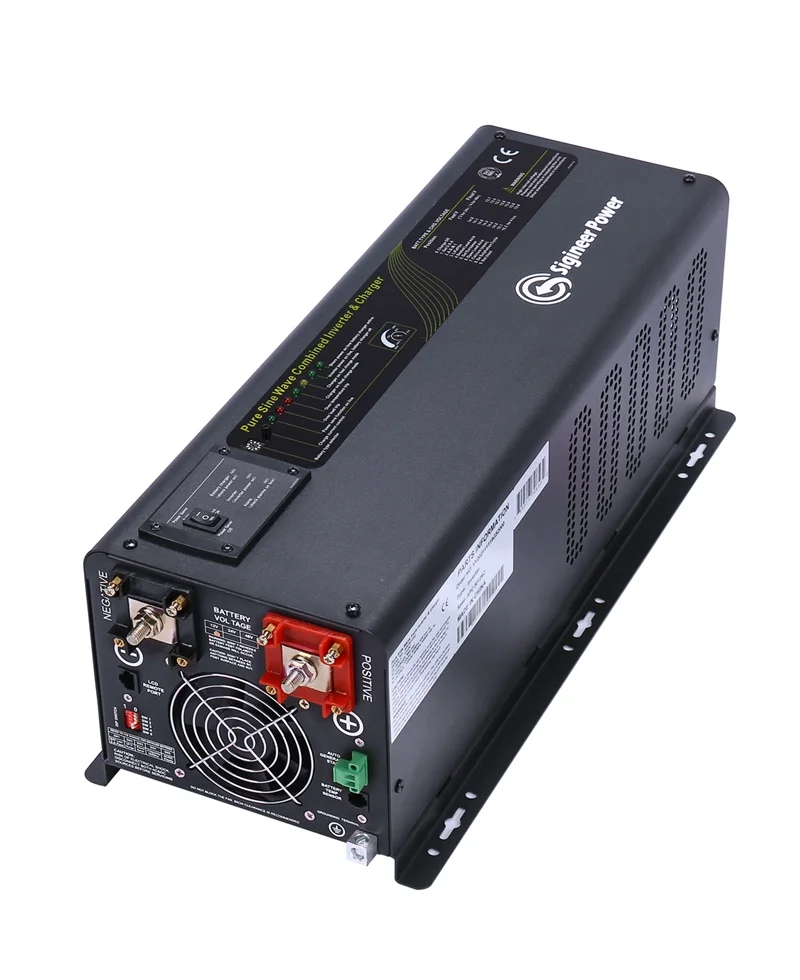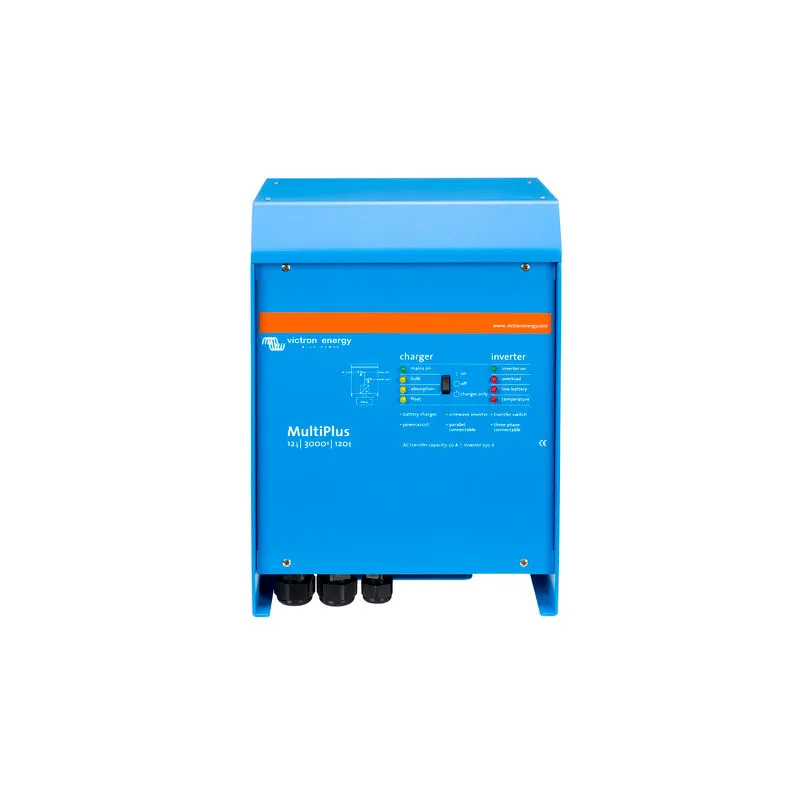
Best Inverter-Chargers for Off-Grid Systems
An inverter-charger combines three critical components into a single unit: a pure sine wave inverter, a multi-stage battery charger, and an automatic transfer switch. Instead of buying, wiring, and mounting three separate devices, you install one box that handles the entire AC side of your off-grid power system.
When running on battery power, the inverter-charger converts DC from your battery bank into clean AC household current. When shore power or a generator is connected, the built-in transfer switch automatically switches your loads to the external AC source and simultaneously charges your batteries using the integrated multi-stage charger. When the external power disconnects, it switches back to inverter mode seamlessly — often in under 20 milliseconds.
For off-grid cabins, RVs, and marine installations, inverter-chargers simplify system design, reduce wiring complexity, and save panel space. They are available in sizes from 1,000 watts for small RV setups to 12,000 watts or more for whole-home off-grid systems.
How Inverter-Chargers Work
An inverter-charger operates in three modes. In inverter mode, it draws DC power from your battery bank (typically 12V, 24V, or 48V) and converts it to 120V or 240V AC power using a pure sine wave output stage. This powers all your household loads — lights, appliances, electronics — with the same clean power quality as grid electricity.
In charger mode, the process reverses. When an external AC source is detected — a generator, shore power pedestal, or utility grid connection — the unit operates as a multi-stage battery charger. It applies bulk, absorption, and float charging phases to safely and efficiently recharge your battery bank. Quality units support configurable charge profiles for AGM, gel, flooded, and LiFePO4 battery types.
The automatic transfer switch (ATS) manages the transition between modes. When it detects incoming AC power, it disconnects the inverter output and connects your loads directly to the external source while simultaneously beginning battery charging. When external power is lost, the ATS switches back to inverter mode. The transfer time is typically 10 to 20 milliseconds — fast enough that most electronics do not notice the switch.
Some advanced inverter-chargers support load assist or power boost mode, where the inverter supplements a limited AC source. If your generator can only provide 3,000 watts but your loads peak at 4,500 watts, the inverter-charger draws the extra 1,500 watts from the battery bank, effectively combining both power sources.
Who Inverter-Chargers Are Best For
- ✓ Off-grid cabins with generator backup — The automatic transfer switch makes generator integration seamless. Start your generator, and the inverter-charger automatically switches loads to generator power and begins recharging batteries. Stop the generator, and it switches back without interruption.
- ✓ RV and marine installations — Space is at a premium in RVs and boats. A single inverter-charger replaces three separate components, saving panel space, wiring runs, and installation complexity. Shore power and generator integration is built in.
- ✓ Hybrid grid-tie and off-grid systems — If your property has unreliable grid power, an inverter-charger lets you use grid power when available and automatically switch to battery backup when the grid fails. It charges your batteries from the grid during stable periods.
- ✓ System builders who value simplicity — Fewer components mean fewer potential failure points, less wiring, and simpler troubleshooting. An inverter-charger reduces system complexity significantly compared to a three-component setup.
Our Top Inverter-Charger Reviews
We have tested inverter-chargers from the most trusted brands in off-grid power. Read our reviews for real-world performance data, transfer time measurements, and installation insights.