1
Growatt
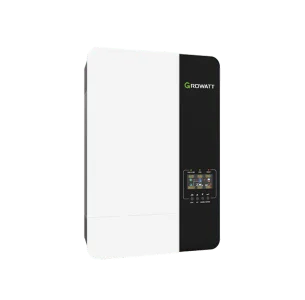
Growatt SPF 5000ES Hybrid Inverter
Output
5,000W
Weight
55 lbs
$900
$1,100
Save $200
Hybrid solar inverters combine a pure sine wave inverter, MPPT charge controller, and battery charger in a single unit. Below: our ranked top picks, followed by a deep dive on how hybrid inverters work and who should use them.
Ranked by overall score from our independent testing methodology. Click any card for the full review.
Growatt

PowLand
| Spec | Growatt SPF 5000ES Hybrid Inverter | PowLand 12000W Hybrid Solar Inverter |
|---|---|---|
| Our Score | 8.7/10 | 8.5/10 |
| Price | $900 | $1,200 |
| Continuous Output | 5,000W | 12,000W |
| Surge Output | 10,000W | 24,000W |
| Solar Input Max | — | — |
| Max Charge Current | — | — |
| Battery Voltage | — | — |
| Warranty | 5 yr | 2 yr |
A hybrid solar inverter manages power flow between three sources: solar panels, battery bank, and AC loads (plus optionally the grid or a generator). The built-in MPPT charge controller takes variable DC voltage from the solar array and converts it to the optimal voltage and current for battery charging, maximizing energy harvest throughout the day.
Simultaneously, the inverter section converts DC battery power to pure sine wave AC for your household loads. An internal microprocessor prioritizes power sources based on your configuration: typically solar first, then battery, then grid or generator as a last resort. When solar production exceeds load demand, excess energy charges the batteries. When batteries are full and solar exceeds demand, grid-tied models can export the surplus.
The automatic transfer switch (ATS) built into most hybrid inverters handles the transition between power sources seamlessly. When grid power fails, the inverter switches to battery backup in milliseconds — fast enough that sensitive electronics never notice the interruption. When a generator is connected, the inverter can use it to charge batteries and power loads simultaneously, then disconnect the generator when batteries reach a target charge level.