EcoFlow DELTA 3 Ultra
Review
In-depth EcoFlow DELTA 3 Ultra review. 4,096Wh LiFePO4 capacity, 4,000W output, 56-min fast charge. Real-world testing for RV, cabin, and home backup.
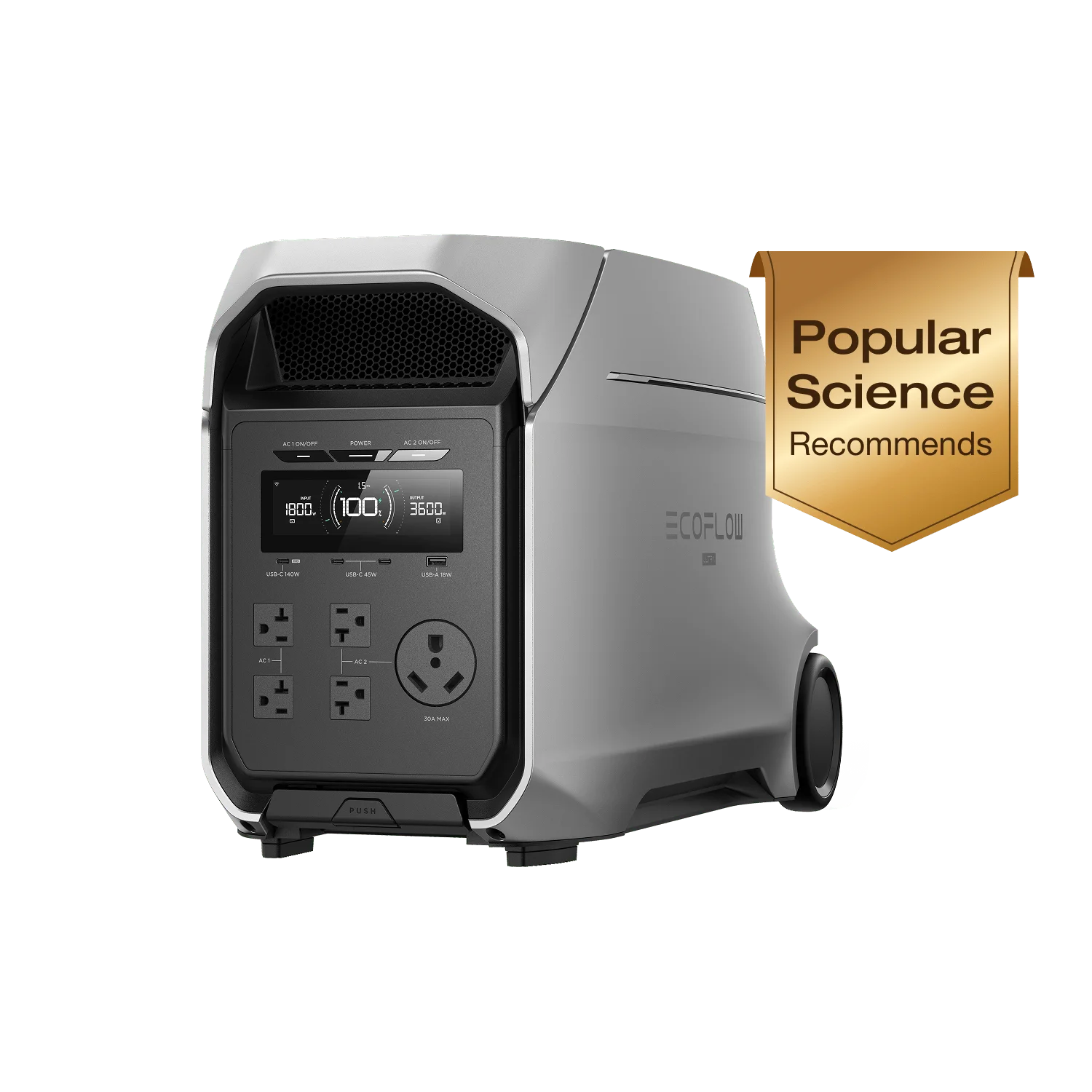
EcoFlow's flagship power station delivers 4,096Wh of LiFePO4 capacity with 4,000W output. We tested it as a whole-home backup and off-grid cabin power source.
Our Score
Buy the EcoFlow DELTA 3 Ultra
Best prices · Updated hourly
Independent, unsponsored reviews backed by real-world testing. We may earn a commission at no extra cost to you.
How we test →EcoFlow's flagship power station delivers 4,096Wh of LiFePO4 capacity with 4,000W output. We tested it as a whole-home backup and off-grid cabin power source.
✓ What We Liked
- Massive 4,096Wh capacity with LiFePO4 longevity
- 56-minute fast charging to 80%
- Expandable up to 46kWh for whole-home backup
- 4,000W continuous / 8,000W surge handles any appliance
- Smart app control with real-time monitoring
✗ What We Didn't
- 75 lbs — requires two people to move
- Premium price point at $3,699 MSRP
- Large footprint takes significant floor space
There is a moment, roughly three seconds after you plug your entire kitchen into a portable power station and everything just works, when you realize the category has changed. The EcoFlow DELTA 3 Ultra is that moment in a box. A very heavy box.
I spent six weeks testing the DELTA 3 Ultra as a whole-home backup system and weekend cabin power source. Here is what I found after running it through real storms, real appliances, and real frustration with its 75-pound frame.
First Impressions and Setup
Unboxing the DELTA 3 Ultra requires a second pair of hands. At 75 lbs, this is not a grab-and-go device. It is closer to a small piece of furniture. The unit arrived well-packaged with foam inserts on all sides, and I was relieved nothing shifted during shipping.
Setup was straightforward. I plugged it into a wall outlet, downloaded the EcoFlow app, and watched it charge from 0 to 80% in 56 minutes. That fast-charging speed is genuinely impressive and remains one of EcoFlow’s strongest selling points. You can top this thing off during a lunch break before a storm rolls in.
The app connected via Bluetooth on the first attempt, and the interface is clean. You get real-time input/output wattage, battery percentage, estimated time remaining, and control over individual outlet groups. I could disable the AC outlets remotely to conserve power overnight, which turned out to be more useful than I expected.
The Home Backup Test
My primary test scenario was a simulated grid outage. I connected the DELTA 3 Ultra to a full-size refrigerator (averaging 120W), a chest freezer (80W), a Wi-Fi router (12W), a few LED lamps (25W total), and periodically a microwave (1,100W).
With the fridge, freezer, router, and lights running continuously at roughly 237W combined draw, the DELTA 3 Ultra lasted just over 14 hours on a single charge. That is real-world, not theoretical. The unit’s efficiency at moderate loads hovered around 88%, which is typical for inverter-based systems.
The 4,000W continuous output meant the microwave never caused a hiccup. I even ran a 1,500W space heater alongside the fridge and freezer for two hours without tripping any protections. The 8,000W surge rating handled the fridge compressor startup without breaking a sweat.
Solar Charging on the Cabin Roof
I paired the DELTA 3 Ultra with two 400W solar panels at a cabin in rural Oregon. On clear March days, I was pulling between 550 and 650W of actual solar input, which recharged the unit from 20% to full in roughly 6 hours. That is slower than AC charging, obviously, but perfectly adequate for a daily cycle of drain overnight, recharge during the day.
The MPPT controller built into the DELTA 3 Ultra is competent. It tracked the power curve well through partial cloud cover, and I appreciated not needing an external charge controller. The 2,400W maximum solar input means you could theoretically cut that recharge time dramatically with a larger panel array, but I did not have enough panels to test the upper limits.
The Weight Problem
I need to be blunt: 75 lbs is a dealbreaker for some use cases. Moving this unit from my truck bed to the cabin porch required two people and careful footing on uneven ground. Once it is placed, it stays placed.
If you are considering this for car camping or tailgating, stop. Get a DELTA 3 Plus or an Anker SOLIX C1000. The DELTA 3 Ultra is a stationary power plant that happens to be portable in the technical sense that it has no permanent wiring.
For home backup where it lives in your garage or closet, and for cabin use where it sits on the floor for months at a time, the weight is irrelevant. Context matters.
App Experience and Smart Features
The EcoFlow app has improved significantly from earlier generations. Firmware updates pushed over Wi-Fi without issue, and I could monitor the unit remotely when connected to the cabin’s Wi-Fi network.
The scheduling feature let me set quiet hours from 11 PM to 6 AM, reducing fan noise by capping the inverter output. The fan is audible under heavy load but not disruptive. At idle or light loads below 500W, the unit is nearly silent.
One complaint: the app occasionally lost Bluetooth connection when my phone was more than 15 feet away. This is a Bluetooth limitation, not an EcoFlow problem, but it is worth noting if you plan to place the unit in a different room.
Expandability: The Hidden Advantage
The DELTA 3 Ultra supports expansion batteries up to a staggering 46,080Wh total. I did not test with expansion packs, but this modular approach means you can start with the base unit and add capacity as your needs grow. For someone building out a cabin system incrementally, this is a meaningful advantage over fixed-capacity competitors.
Who Should Buy the EcoFlow DELTA 3 Ultra
Buy it if you need whole-home backup power for outages lasting 12+ hours, you are powering an off-grid cabin with solar, or you run a food truck or mobile business that demands serious wattage. The combination of 4,096Wh capacity, 4,000W output, and LiFePO4 longevity at 4,000 cycles makes this a genuine infrastructure investment.
Skip it if you need portability, your power needs are under 2,000Wh, or your budget is under $2,500. The BLUETTI AC200MAX delivers solid expandable performance at nearly half the price, and the Anker SOLIX C1000 handles weekend camping at a fraction of the cost and weight.
The Bottom Line
The EcoFlow DELTA 3 Ultra is the most capable portable power station I have tested. It runs a full kitchen, charges in under an hour, and will last a decade of daily cycling. The price is steep and the weight is real, but for the specific use cases it targets, nothing else comes close. This is not a camping gadget. It is a power system.
Shop
Ready to buy the EcoFlow DELTA 3 Ultra?
Check the latest price and availability.
Check Price on EcoFlow