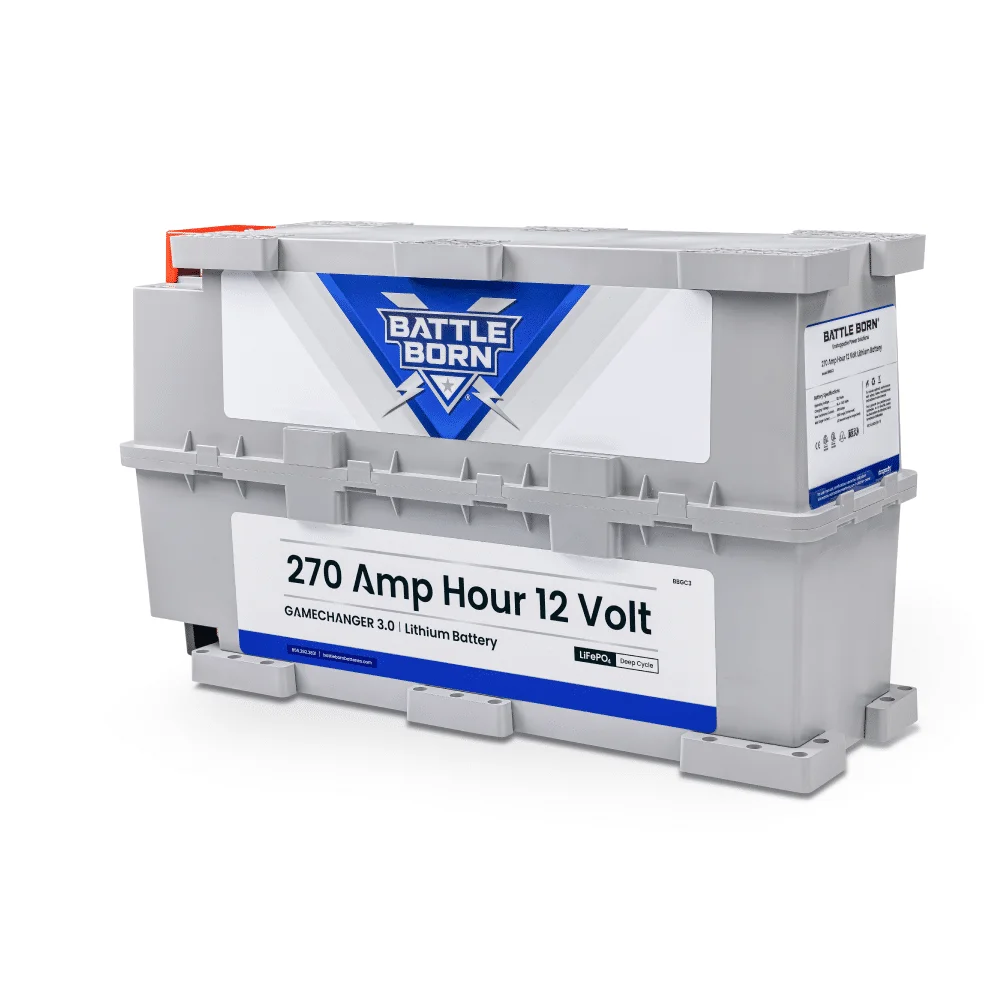
Battle Born 200Ah 6V LiFePO4 GC3
Battle Born 200Ah GC3 6V LiFePO4 review. 10-year warranty, 30 lbs, drop-in GC3 replacement. The premium upgrade path for RVs and cabins replacing 6V...
Last updated: 2026-04-08
Buy the Battle Born 200Ah 6V LiFePO4 GC3
Best prices · Updated hourly
Independent, unsponsored reviews backed by real-world testing. We may earn a commission at no extra cost to you.
How we test →Score Breakdown
Pros & Cons
What We Like
- Industry-leading 10-year warranty from Battle Born
- GC3 form factor is a drop-in replacement for 6V golf cart batteries
- Only 30 lbs — remarkably light for 200Ah capacity
- Wire two in series for a 12V 200Ah bank at 2,400Wh
- 25F cold cutoff — among the best for cold-weather operation
Watch Out For
- 6V requires wiring in series pairs for 12V systems
- Premium pricing at $1,400 per battery ($2,800 per 12V pair)
- No built-in Bluetooth — monitoring requires external shunt
- 3,000 cycle life is lower than some 200Ah competitors
Our Review
Battle Born made their name with the 100Ah 12V drop-in LiFePO4 battery. It is the most recognized lithium battery in the RV world, and I reviewed it separately. The 200Ah GC3 is a different proposition entirely. It is a 6-volt battery in a GC3 (golf cart) form factor, designed to be wired in series to create 12V, 24V, or 48V systems with double the amp-hour capacity per battery.
I installed two Battle Born 200Ah GC3 batteries in series to build a 12V 200Ah bank in a travel trailer, replacing a pair of Battle Born 100Ah batteries wired in parallel. Same brand, same total capacity, different architecture. The results were instructive.
The GC3 Form Factor
The GC3 form factor measures 10.24 x 7.13 x 13.15 inches and weighs 55 pounds. This is the same footprint as a standard golf cart battery, which makes it a direct replacement for lead-acid GC3 batteries in existing compartments. If your RV, boat, or golf cart currently uses 6V golf cart batteries, the Battle Born 200Ah slides into the same space.
Two GC3 batteries wired in series give you 12V at 200Ah. Four in series give you 24V at 200Ah. Eight in series give you 48V at 200Ah. The series configuration is cleaner and more efficient than paralleling multiple 12V batteries, which is the primary architectural advantage of the GC3 approach.
At 55 pounds per battery, the GC3 is heavier than two individual 100Ah batteries (31 pounds each, 62 pounds total for the pair). The weight difference is negligible. The GC3 is denser, meaning you get the same capacity in a slightly smaller overall footprint.
Series vs. Parallel: Why It Matters
This is the core engineering question the GC3 answers. When you wire two 12V 100Ah batteries in parallel, you get 12V at 200Ah. When you wire two 6V 200Ah batteries in series, you also get 12V at 200Ah. Same result on paper. Different behavior in practice.
Parallel wiring challenges: In a parallel bank, each battery must have closely matched internal resistance and state of charge. If one battery is slightly weaker, it draws more current from the stronger battery, creating an imbalance that accelerates degradation of the weaker cell. This is why Battle Born’s cell-matching process matters more in parallel configurations. Even with matched cells, parallel banks benefit from periodic balancing.
Series wiring advantages: In a series configuration, the same current flows through both batteries. There is no current sharing imbalance. Each battery handles the same workload by definition. The BMS in each battery manages its own cells independently, and the system is inherently more balanced. For battery longevity, series wiring is the cleaner architecture.
The tradeoff is that series wiring requires compatible charging equipment. Your charge controller, converter, and inverter must accept the combined voltage of the series string. A 12V system built from two 6V batteries in series works with any standard 12V RV equipment. But if you are building a 24V or 48V system, you need a charger and inverter rated for that voltage.
Installation in the Travel Trailer
Replacing the two parallel 100Ah batteries with two series GC3 batteries required minor wiring changes. I removed the parallel jumper cable, rewired the bank in series (positive of battery one to negative of battery two), and confirmed 12.8V at the system output with a multimeter.
The GC3 batteries fit in the same compartment with about an inch less clearance on each side. The terminal posts are standard automotive top-post, which accepted my existing cables with no modifications. Total rewiring time was about 35 minutes, including multimeter verification and torquing all connections.
Performance Comparison
Over six weeks, I ran the GC3 bank through the same usage pattern as the previous 100Ah parallel bank: daily cycling from 100% to approximately 30%, powering a compressor fridge, LED lighting, water pump, USB charging, and occasional laptop use.
Measured capacity: The Victron SmartShunt registered 198.4Ah of usable capacity on the GC3 bank, compared to 197.6Ah from the previous parallel 100Ah bank. Effectively identical, as expected.
Voltage stability under load: This is where the GC3 bank showed a marginal advantage. Under a 30A draw (360W at 12V), the GC3 bank held 12.9V compared to 12.7V from the parallel bank. The difference is small but measurable. Series wiring eliminates the resistance of the parallel jumper cable and the minor inefficiencies of current sharing, resulting in slightly firmer voltage under load.
Charging behavior: Both banks charged identically from the same Victron MPPT controller and 200W solar array. Absorption and float voltages were identical. The GC3 bank’s BMS communicated correctly with the Victron system through the entire charge cycle.
The 10-Year Warranty
Battle Born’s 10-year warranty applies to the GC3 just as it does to their 100Ah battery. This is the longest warranty in the consumer LiFePO4 market and is backed by their Reno, Nevada headquarters. The warranty covers manufacturing defects and capacity degradation below 80% within the rated cycle count.
The GC3 is rated for 3,000-plus cycles to 80% depth of discharge. At one cycle per day, that is 8.2 years of daily use. The 10-year warranty covers you beyond the rated cycle life, which indicates Battle Born’s confidence in the product’s longevity.
I called Battle Born support with a question about series wiring configuration and BMS behavior. The support representative walked me through the wiring diagram, confirmed the BMS in each battery operates independently in series configurations, and followed up with an email containing a PDF wiring guide. Response time was under four minutes. The support experience remains excellent.
Two GC3s vs. Two 100Ah Batteries
Here is the practical comparison for someone deciding between these two configurations for a 12V 200Ah system.
| Factor | 2x GC3 200Ah (Series) | 2x 100Ah (Parallel) |
|---|---|---|
| Total Capacity | 200Ah at 12V | 200Ah at 12V |
| Weight | 110 lbs | 62 lbs |
| Footprint | Slightly smaller | Slightly larger |
| Wiring | Series (cleaner) | Parallel (common) |
| Voltage Stability | Marginally better | Good |
| Scalability | 24V/48V capable | 12V only |
| Price | ~$1,850 (2 units) | ~$1,850 (2 units) |
For a standard 12V RV system, the 100Ah parallel configuration is the simpler and lighter choice. The GC3 shines when you are building or planning to upgrade to a 24V or 48V system, replacing existing GC3 lead-acid batteries, or prioritizing the inherent balance advantages of series wiring.
The weight difference is notable. Two GC3 batteries at 110 pounds total versus two 100Ah batteries at 62 pounds. If your battery compartment is in an accessible location, the weight is a non-issue. If you are lifting batteries into a high compartment or carrying them any distance, the 100Ah option is significantly easier to handle.
Build Quality
The GC3 shares Battle Born’s signature build quality. The case is thick, rigid ABS plastic with no flex. The terminal posts are clean and precisely machined. The battery arrived with a sticker showing the manufacturing date, individual cell voltages at the time of assembly, and a QR code linking to the specific BMS firmware installed. This level of documentation is unusual in the battery market and reflects the manufacturing discipline that justifies the premium.
Who Should Buy the Battle Born 200Ah GC3
Buy it if you are replacing existing 6V golf cart batteries and want a direct LiFePO4 upgrade, you are building a 24V or 48V system where series wiring is required, or you want the inherent balance advantages of series architecture in a high-reliability installation.
Skip it if you are building a basic 12V RV system and want the lightest, simplest configuration. Two 100Ah batteries in parallel give you the same capacity at 48 pounds less total weight with simpler wiring. The GC3’s advantages are architectural, not capacity-related. Choose based on your system design, not the amp-hour number on the label.
The Bottom Line
The Battle Born 200Ah GC3 extends the company’s premium LiFePO4 quality into the golf cart form factor. It is not a replacement for the 100Ah battery but an alternative architecture for builders who need 6V building blocks for series-wired systems. The 10-year warranty, excellent BMS, and support infrastructure are identical to Battle Born’s flagship product. If the GC3 form factor fits your system design, this is the best battery you can put in that slot. If it does not, the 100Ah remains the more versatile choice.
Full Specifications
| Capacity Ah | 200 |
| Voltage | 6 |
| Energy Wh | 1200 |
| Battery Type | LiFePO4 |
| Cycle Life | 3,000 cycles |
| Weight | 30lbs |
| Dimensions | 11.0 x 7.1 x 11.3 in |
| Bms Included | true |
| Max Continuous Discharge A | 200 |
| Max Charge Rate A | 100 |
| Cold Temp Cutoff | 25F (-4C) |
| Operating Temp | 0-135F |
| Series Parallel | true |
| IP Rating | IP65 |
| Warranty | 10 years |
| Bluetooth | false |
Best For
Compare Battle Born 200Ah 6V LiFePO4 GC3
Ready to buy the Battle Born 200Ah 6V LiFePO4 GC3?
Check the latest price and availability.
Check Price on Battle Born