Anker SOLIX C800 Plus
Review
Anker SOLIX C800 Plus review. 768Wh LiFePO4, 1,200W output, built-in camping light, 58-min recharge. A top pick for car camping and lightweight...
The Anker SOLIX C800 Plus delivers 768Wh and 1,200W in a sub-20-pound package with a 58-minute full recharge, making it one of the most compelling mid-range portable power stations available.
Our Score
Buy the Anker SOLIX C800 Plus
Best prices · Updated hourly
Independent, unsponsored reviews backed by real-world testing. We may earn a commission at no extra cost to you.
How we test →The Anker SOLIX C800 Plus delivers 768Wh and 1,200W in a sub-20-pound package with a 58-minute full recharge, making it one of the most compelling mid-range portable power stations available.
✓ What We Liked
- Under 20 lbs with ergonomic dual-handle design — genuinely portable
- 58-minute full recharge via AC is outstanding for the price
- 5 AC outlets provide flexibility uncommon at this capacity
- Built-in retractable LED camping light with three modes
- LiFePO4 with 3,000 cycles and 5-year warranty
✗ What We Didn't
- 768Wh capacity limits runtime for high-draw appliances
- 1,200W output caps out below many mid-range competitors
- Not expandable — no add-on battery option
- 300W max solar input means slower off-grid recharging
The mid-range portable power station market is crowded, and the Anker SOLIX C800 Plus does not try to stand out with a single headline feature. Instead, it quietly does everything well. That might be enough.
The Sweet Spot
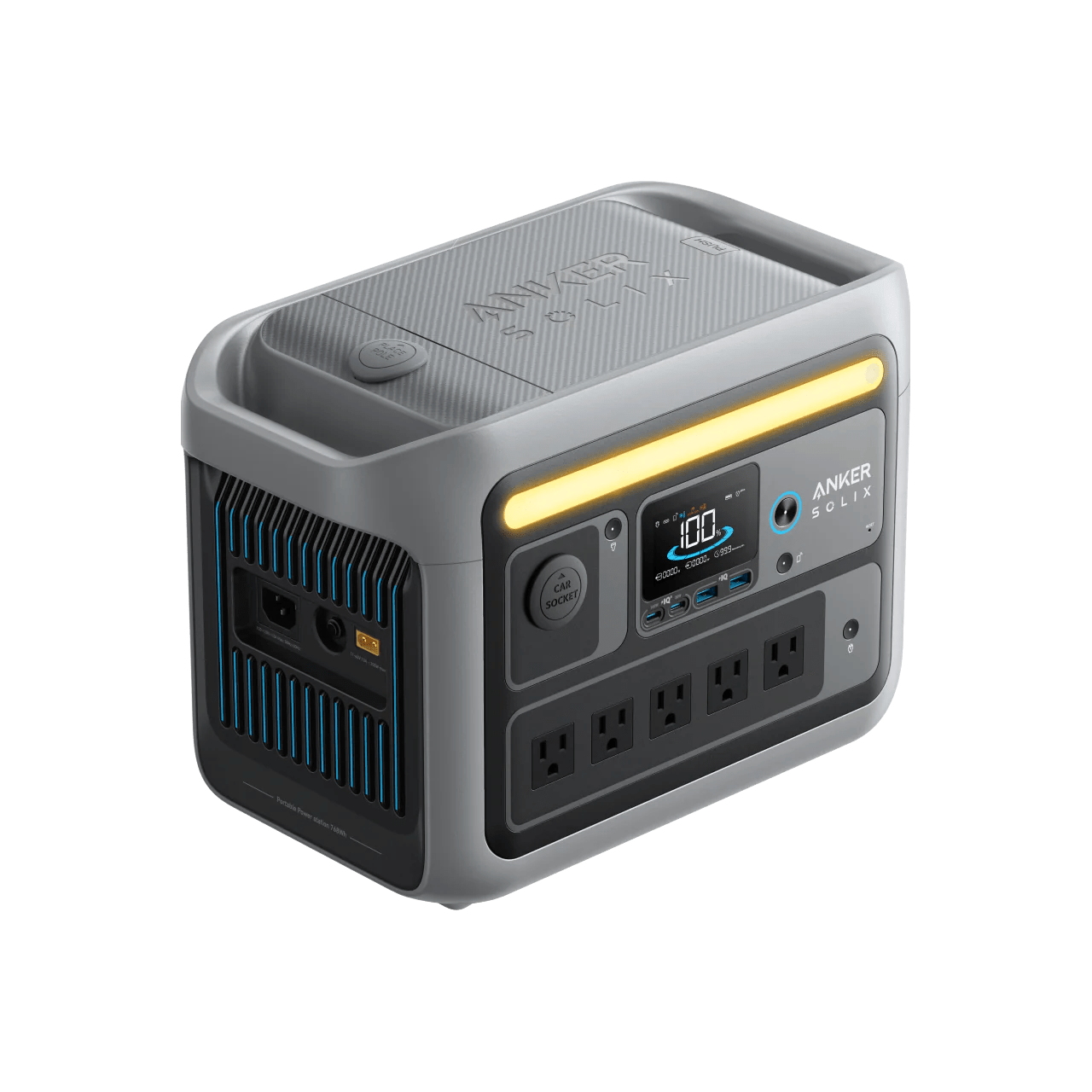
At 768Wh and 19.8 pounds, the C800 Plus sits in the goldilocks zone where you have enough capacity to run a compressor fridge overnight and enough portability to carry it from a truck bed to a picnic table without a second thought. The dual-handle design distributes weight evenly, and the compact footprint (11.4 x 7.3 x 9.4 inches) means it tucks into tight spaces in a vehicle.
The 58-minute full AC recharge is the fastest in its class. Not 0-80% — full. That is genuinely useful for people who remember to charge their gear 45 minutes before leaving. Five AC outlets is generous for a station this size, and the 1,200W continuous output handles blenders, small electric kettles, and most kitchen appliances you would bring camping.
The built-in retractable LED camping light is a surprisingly thoughtful touch. Three brightness modes, warm tone, positioned on top where it actually illuminates a table or tent. I have used it more than I expected.
What Holds It Back
The C800 Plus is not expandable. What you see is what you get — 768Wh, no add-on batteries, no scaling up. If your power needs grow, you buy a different station. The 300W max solar input is adequate but not fast. A 200W panel will take roughly four hours to fully charge it from empty in good conditions.
The BLUETTI AC70 is the most direct competitor. Same 768Wh capacity, similar weight class, nearly identical pricing. The AC70 has a slightly lower 1,000W continuous output but adds Power Lifting to 2,000W for brief high-draw loads. The Anker wins on AC output (1,200W vs 1,000W) and recharge speed. The BLUETTI wins on the power lifting feature and arguably app polish. Honestly, both are excellent, and the choice comes down to whether you value the Anker’s raw output or BLUETTI’s ability to handle occasional spikes above 1,200W.
Who Should Buy It
Buy the C800 Plus if you want a compact, fast-charging mid-range station for car camping, tailgating, or weekend power outages. The 58-minute recharge is a genuine differentiator if you are frequently topping off between uses. It handles real loads without being a burden to move around.
Skip it if you need expandability, more than 1,200W continuous, or plan to run heavy loads for multiple days without AC recharging. The non-expandable design means this is a one-and-done purchase. If your needs might scale, look at the EcoFlow DELTA 2 Max, which lets you grow the system over time.
For a station you will use weekly and charge often, the C800 Plus is hard to beat.
Shop
Anker SOLIX C800 Plus is discontinued
Anker no longer sells this model. The closest current alternative is the Anker SOLIX C800.
Read the Anker SOLIX C800 Review →