1
Victron
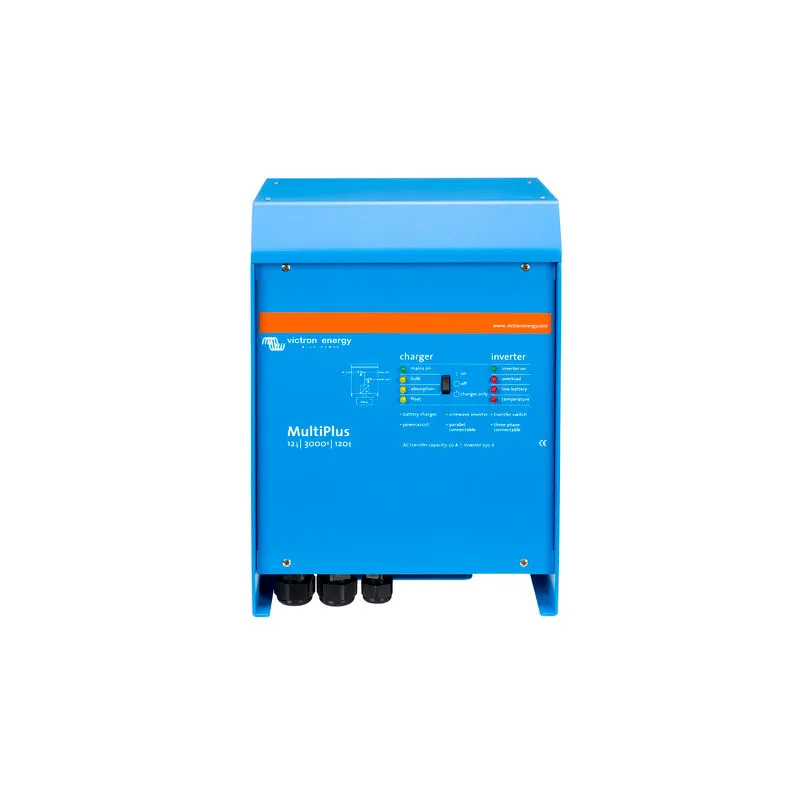
Victron MultiPlus 12/3000/120
Output
3,000W
Weight
53 lbs
$1,300
$1,500
Save $200
Off-grid solar inverters are the backbone of any cabin, homestead, or whole-home off-grid build. The best units integrate solar charging, battery management, and pure sine wave AC output — typically at 3,000W or more with 48V support. Below: our ranked top picks.
Ranked by overall score from our independent testing methodology. Click any card for the full review.
Victron
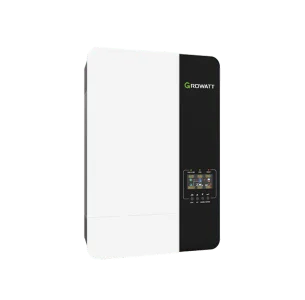
Growatt

PowLand

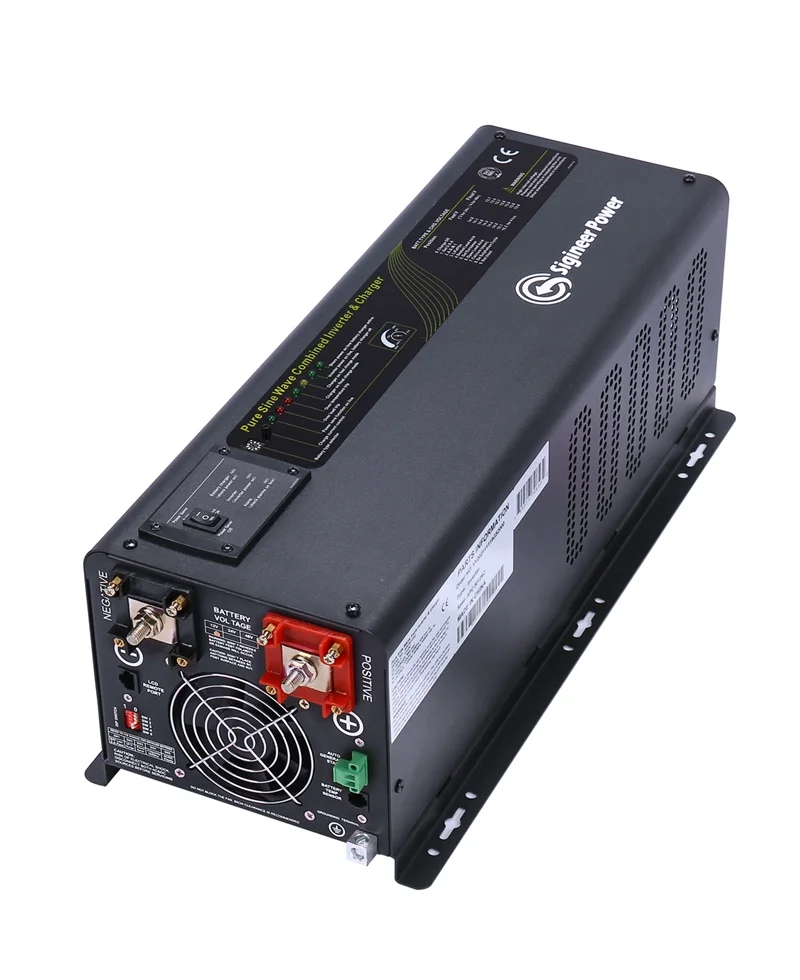
Sigineer
| Spec | Victron MultiPlus 12/3000/120 | Growatt SPF 5000ES Hybrid Inverter | PowLand 12000W Hybrid Solar Inverter | Renogy 3000W 12V Pure Sine Wave Inverter | Sigineer 3000W 24V Inverter-Charger |
|---|---|---|---|---|---|
| Our Score | 9.3/10 | 8.7/10 | 8.5/10 | 8.4/10 | 8.3/10 |
| Price | $1,300 | $900 | $1,200 | $415 | $600 |
| Continuous Output | 3,000W | 5,000W | 12,000W | 3,000W | 3,000W |
| Surge Output | 6,000W | 10,000W | 24,000W | 6,000W | 9,000W |
| Battery Voltage | — | — | — | — | — |
| Solar Input | — | — | — | — | — |
| Charge Current | — | — | — | — | — |
| Warranty | 5 yr | 5 yr | 2 yr | 2 yr | 2 yr |
A true off-grid inverter is built for continuous 24/7 operation as your system's primary power source. Grid-tie inverters disconnect the moment utility power fails — they are designed as grid companions, not stand-alone power plants. Off-grid inverters are the opposite: they operate without a grid reference, use your battery bank as their voltage source, and handle starting and running every appliance in your home.
The features that matter most are continuous output wattage (must cover peak simultaneous loads), surge capacity (handles motor startup spikes of 3–5x running wattage), battery voltage support (48V is the off-grid standard for whole-home systems), and integrated charging (MPPT solar, AC shore power, or generator start).
For system design guidance see our DIY solar system build guide and inverter sizing guide.