Propane Refrigerator vs 12V Fridge for Off-Grid Homes
Last updated: 2026-11-10
Quick answer: A propane refrigerator runs on a gas flame instead of a compressor, so it needs no battery bank, but it does need a gas line, a licensed gas fitter, careful venting, and a level floor. A 12V compressor fridge needs solar and batteries but burns nothing indoors, which makes it simpler to live with in an off-grid home with a big solar system. A propane fridge makes sense where solar is thin and you already run propane.
This comparison stays inside one manufacturer, Unique Appliances, which makes both kinds, so the numbers line up. Every spec, price, and safety point below comes from Unique’s manuals and product pages, the U.S. EIA, or the CPSC, and each one is linked. Prices are as of November 10, 2026.
How a Propane Refrigerator Works
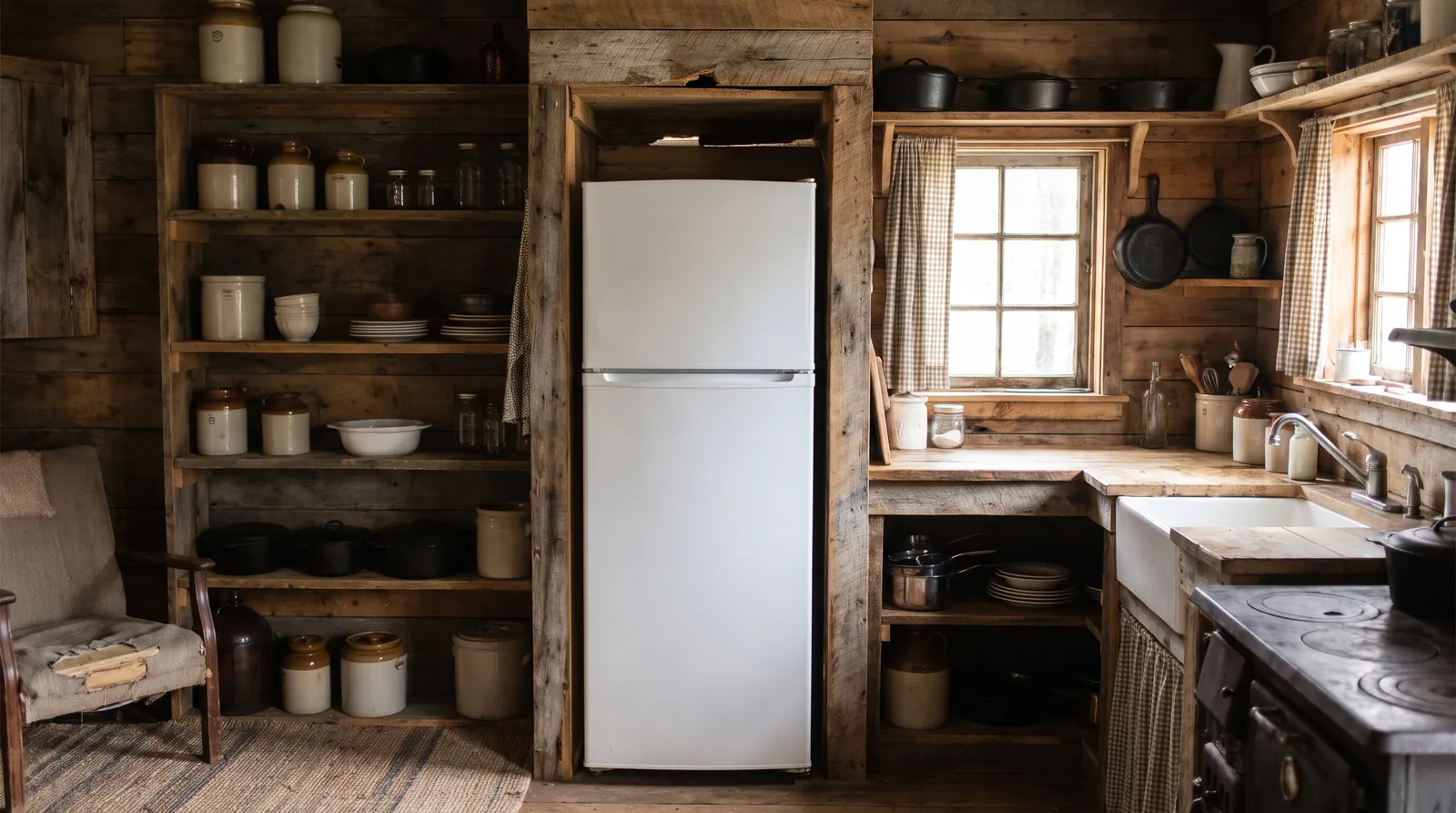
An absorption refrigerator is a fridge that cools without a compressor, using ammonia and hydrogen gas inside a sealed cooling unit. Unique’s UGP-C manual explains that “ammonia is liquefied in the finned condenser coil at the top rear of the refrigerator.” The liquid ammonia then flows into the evaporator in the freezer, where it evaporates into a circulating flow of hydrogen gas.
That design comes with some habits you have to live with. Unique’s manual covers three:
- It must be level, side to side and front to back. “If the refrigerator is operated when not level, liquid ammonia will accumulate in sections of the evaporator tubing,” which blocks circulation. Unique’s warranty “will not cover recharge/rebuild if caused by not running the fridge level.”
- It starts slowly. “The cooling cycle may require up to 8 hours of running time before the cooling unit is fully operational.”
- It cares about room temperature. The optimal range is 65 to 90 °F. Below 60 °F, “there is a risk that the temperature in the main compartment will drop below freezing point.”
The standard UGP-10C also has a 110 V backup that draws 2.5 A and 300 W, per Unique’s product page. That’s a big draw for a battery bank. Our 12V vs 120V fridge guide covers why absorption fridges belong on gas, not on their electric backup.
How a 12V Compressor Fridge Compares
A 12V compressor fridge is a fridge that runs on DC power from a battery bank and cools with a compressor. Unique’s closest match to its 10 cu ft propane model is the UGP-275L, a 10 cu ft bottom-mount fridge that runs on 12 V or 24 V DC. Its spec sheet lists:
- 63 W power consumption on 12 V or 24 V
- An average running current of 5.25 A at 12 V or 2.62 A at 24 V
- 584 Wh per 24 hours at a +25 °C room temperature, with the freezer at -14 °C and the fridge at +4 °C
- A minimum solar requirement of 240 W
- A weight of 119 lb and a 2-year warranty, with an optional AC converter sold separately
Nothing in it burns, so the gas-fitter, venting, and carbon monoxide rules below don’t apply. What it needs instead is a battery and solar system sized for that 584 Wh a day. To size the electric side, use the power calculator and the guide on what size power station runs a refrigerator.
Propane vs 12V Fridge: Side by Side
| Unique UGP-10C SM (propane, unvented) | Unique UGP-22 DV (propane, direct vent) | Unique UGP-275L (12/24 V DC compressor) | |
|---|---|---|---|
| Capacity | 9.7 cu ft (7.6 fridge, 2.1 freezer) | 22.1 cu ft (16.2 fridge, 5.9 freezer) | 10 cu ft |
| Energy per 24 h | About 1.4 lb LPG | About 2.0 lb LPG | 584 Wh at 25 °C |
| Burner / power | 600 to 1,600 BTU | 684 to 2,270 BTU | 63 W |
| Venting | Unvented; uses room air | Vents outside; must be on an exterior wall | No combustion, so no flue |
| Top clearance to combustibles | 6 in | 10 in | Not listed on spec sheet |
| Size and weight | 64.5 x 23.5 x 28.25 in, 176 lb | 69.5 x 31.5 x 42.75 in, 320 lb | 119 lb |
| Price (as of Nov 10, 2026) | $2,299 | $5,399 | $2,149 |
Sources: the UGP-10C page, the UGP-22 DV page, the UGP-22 DV manual, the UGP-C manual, the UGP-275L spec sheet, and the UGP-275L page. Unique is not an affiliate partner of this site, so these are plain links.
The Running-Cost Math
Here’s the propane side, worked out from three published numbers:
- Fuel use: Unique rates the UGP-10C at about 1.4 lb of LPG per 24 hours.
- Density: Emerson’s LP-Gas Serviceman’s Handbook lists propane at 4.20 lb per gallon of liquid at 60 °F.
- Price: the EIA’s weekly U.S. residential propane price was $2.820 per gallon, excluding taxes, for the week of November 2, 2026.
Formula: gallons per day = lb per day ÷ 4.20; cost = gallons x price per gallon.
- UGP-10C: 1.4 ÷ 4.20 = 0.333 gallons a day. That’s about $0.94 a day, $28.20 per 30 days, or $343.10 a year.
- UGP-22 DV: 2.0 ÷ 4.20 = 0.476 gallons a day. That’s about $1.34 a day, $40.29 per 30 days, or $490.14 a year.
These figures have two caveats. Unique’s fuel figure is approximate, and room temperature and door openings change it. The EIA figure is a residential bulk average that leaves out taxes and delivery, and cylinder-exchange prices aren’t covered here.
As a sanity check, Emerson lists propane at 21,548 BTU per pound. At that rate, 1.4 lb a day averages about 1,257 BTU per hour, which sits inside the 600 to 1,600 BTU range Unique prints for the UGP-10C.
The DC side uses 0.584 kWh a day, and Unique says to plan on at least 240 W of panels. Your cost there is the battery and solar system, which depends on your setup. Up front, the UGP-10C lists at $2,299 and the UGP-275L at $2,149. That’s before the DC fridge’s solar and batteries and the propane fridge’s gas line, regulator, and licensed install.
Venting, Clearances, and Carbon Monoxide
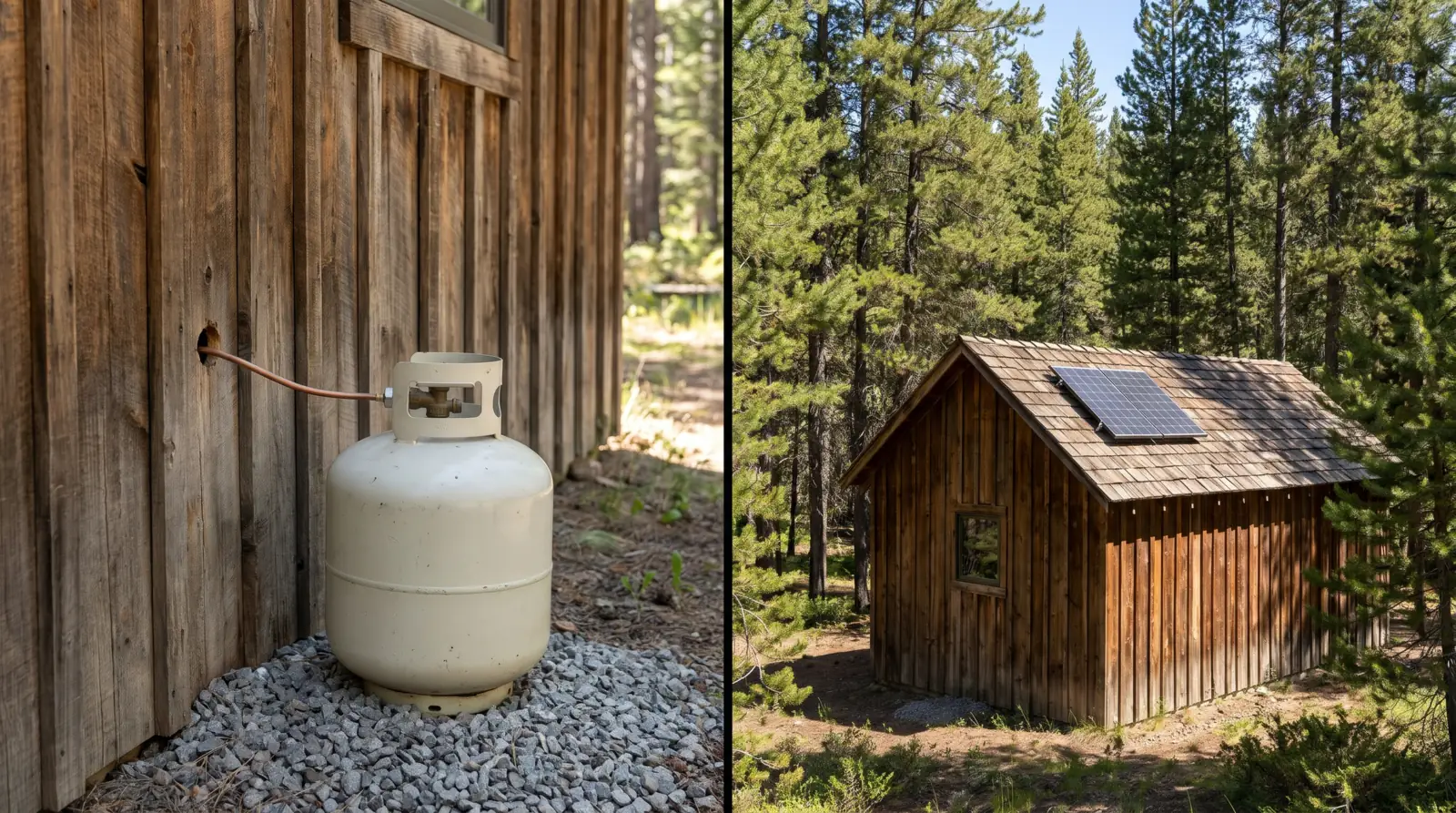
This is where the two types differ most. Unique’s UGP-C manual is blunt about it: “This is an unvented gas-fired appliance. The refrigerator uses air (oxygen) from the area in which the refrigerator is used.” It warns that without adequate combustion and ventilation air, the fridge “may give off excess CARBON MONOXIDE.” It also says the dwelling must have adequate fresh air and the appliance “must not be used in an airtight application.”
Installation, in Unique’s words: “This refrigerator must be installed by a licensed gas fitter.” For the direct-vent model, the UGP-22 DV manual says, “A licensed gas installer must hook up the direct vent system.”
Direct vent: the DV model “must be against an exterior wall keeping in mind that included with the fridge there is 19” of available venting.” Unique says that failing to fully connect the vent to the outside wall discharges flue gases into the room, which it calls “an illegal uncertified application” that may cause unsafe carbon monoxide levels. The DV manual also says the dwelling must have a separate wall-mounted CO alarm “to meet most building codes.”
Federal CO guidance (separate from Unique): the CPSC’s carbon monoxide Q&A says, “Never operate unvented fuel-burning appliances in any room where people are sleeping.”
CPSC also recommends battery-operated or battery-backup CO alarms meeting UL 2034 on every level of the home and outside sleeping areas. It doesn’t recommend putting them in kitchens or above fuel-burning appliances.
Clearances to combustibles (Unique models only):
- UGP-6C/8C/10C: top 6 in, sides 2 in, rear 1 in. Don’t install directly on carpet. Remove it, or cover it with a metal or wood panel that runs the full width and depth.
- UGP-22 DV: top 10 in, sides 2 in, rear 1 in, with the left-hand rear shield mounted.
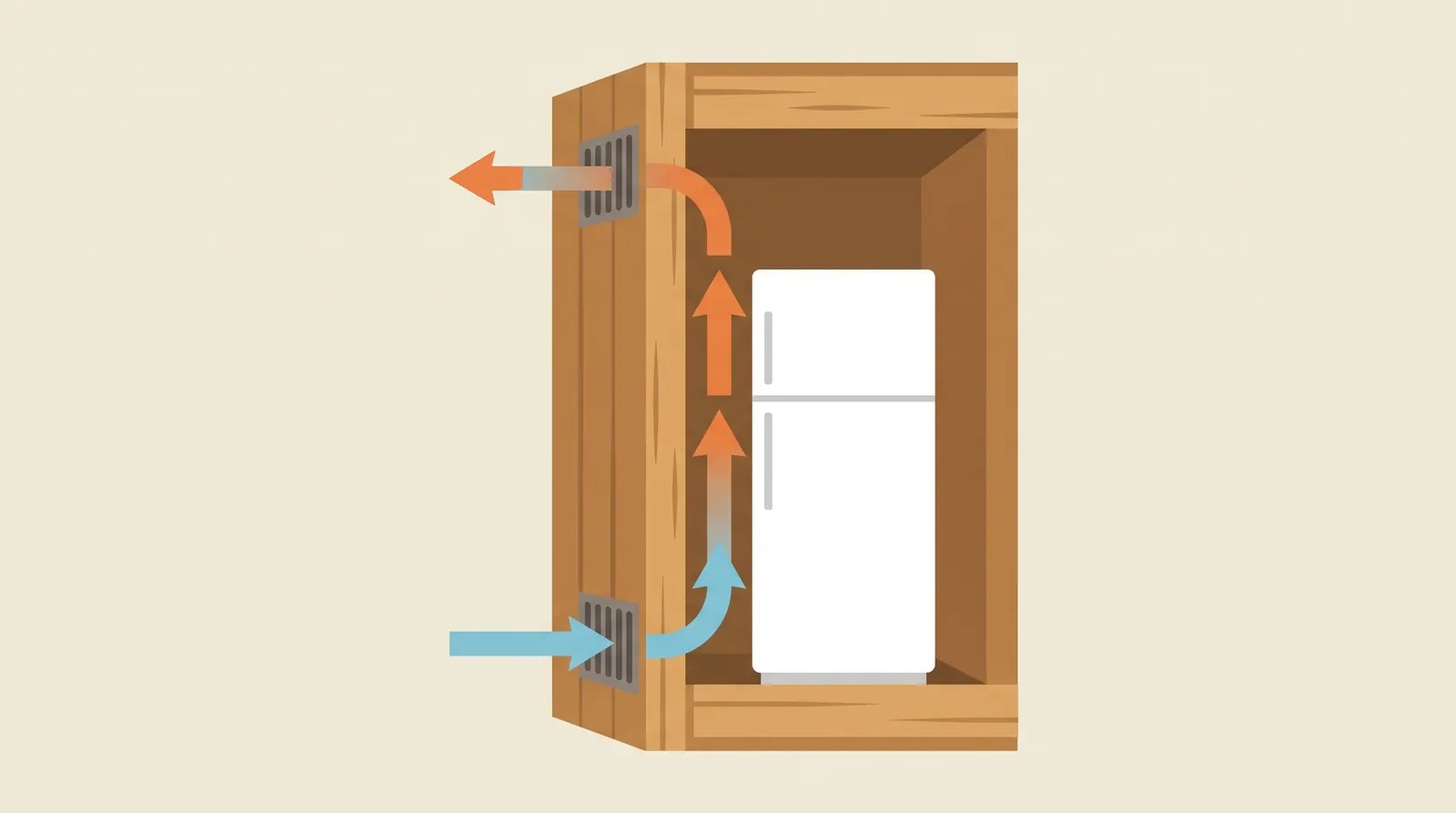
- Enclosed installs: Unique recommends two air vents, one 6 in off the floor and the other at or above the top of the appliance. A space that’s fully open at the top and sides needs no extra venting.
Gas supply: the regulator must be set at 11 in water column. Supply pressure can be no more than 12 in and no less than 11 in water column. Unique says installation must conform with local codes or, where there are none, the national Fuel Gas Code.
If you smell gas, Unique’s manual says to:
- Open windows.
- Don’t light any appliance, and put out any open flames.
- Don’t touch electrical switches or use phones.
- Evacuate.
- Shut off the fuel at the LP tank.
- Call emergency services.
Leak-check with soapy water or a non-corrosive detector, never a flame.
CO-monitor (CM) models: test the combination CO alarm and safety shut-off after storage, before each start-up, and at least once a week during use. Clean the flue tube and clear lint and spider webs from the burner before every lighting. (Unique UGP-C/CR manual)
Canada only
These rules come from Unique’s Canadian guidance and apply in Canada. Don’t read them as U.S. rules.
- Unvented fridges: “In Canada, an unvented refrigerator shall only be installed in an area that is not normally occupied, not used in sleeping quarters,” and not in an area that communicates with occupied areas.
- Dwellings: Unique says that under the 2010 B149 code, “if a propane fridge is being used in a dwelling it needs to be the direct vent type.” It must sit no more than 18 in from an outside wall.
- CM models: Unique says it is illegal to run a CM model in Canada without its CO alarm and shut-off.
Canadian installs also follow B149.2, the Propane Storage and Handling Code.
How to Choose: Step by Step
- Start with your solar. If you can’t support about 584 Wh a day plus your other loads, a DC fridge means growing the battery and solar system first.
- Check your propane situation. If you already have a tank and a gas line, a propane fridge adds a gas appliance to a system you have. If you don’t, budget for a licensed gas fitter.
- Decide where it will sit. An unvented model needs adequate fresh air, can’t go in an airtight space, and per CPSC can’t run in a room where people sleep. A direct-vent model must go against an exterior wall.
- Check the room temperature. A cabin that drops under 60 °F risks freezing the main compartment of an absorption fridge.
- Check the floor. An absorption fridge must be level both ways.
- Compare the up-front cost. That’s $2,299 for the UGP-10C vs $2,149 for the UGP-275L, plus whichever system each needs.
- Plan CO alarms either way, following CPSC’s placement guidance.
For the rest of the power system, see the off-grid cabin power setup guide and the off-grid cabin use case.
A Note on Portable 12V Fridges
For a small cabin or van, a portable compressor fridge is a different class of product. One example is the EcoFlow GLACIER Classic 45L. EcoFlow’s spec page lists:
- Power: 55 W rated
- Daily energy: 190 Wh per 24 hours refrigerating at 4 °C, and 750 Wh freezing at -18 °C, both at a 25 °C room temperature in Eco mode
- Charging: solar input of 11 to 30 V at up to 110 W, and car charging at 12/24 V up to 100 W
- Weight: 51 lb
It’s $799 without the plug-in battery (compare-at $849) on EcoFlow’s product page as of November 10, 2026. It’s a cooler-sized fridge, not a full-size home refrigerator.
Off-Grid Fridge Checklist
- My daily solar and battery budget can cover a DC fridge (about 584 Wh a day for the UGP-275L).
- If propane: a licensed gas fitter will do the install.
- If unvented propane: the room has adequate fresh air, isn’t airtight, and no one sleeps in it.
- If direct vent: the fridge goes against an exterior wall and the vent is fully connected outside.
- Clearances to combustibles follow the model’s manual, and there’s no carpet underneath.
- Enclosed alcoves have a low vent and a high vent.
- The regulator is set to 11 in water column.
- The floor is level side to side and front to back.
- The room stays above 60 °F, or I accept the freezing risk.
- UL 2034 CO alarms are on every level and outside sleeping areas.
- In Canada: the Canada-only rules above are met.
Which Should You Choose?
- Choose a propane refrigerator if your solar is limited, you already run propane, and you can give it a licensed install, proper venting, a level floor, and a warm room. Go direct vent if it will sit in living space.
- Choose a 12V compressor fridge if your solar and battery bank can carry about 584 Wh a day, or you’d rather keep combustion out of the house entirely.