Sump Pump Battery Backup Checklist Before an Outage
Last updated: 2026-09-29
A sump pump battery backup only works if you write down what the manuals actually print. I live in Washington State, and the basement pump is the load I will not guess at. This is a checklist, not a shopping roundup, and I have not run a test on these pumps. The direct answer: FEMA’s Cook County guidance says a basement sump pump will not run when the electricity is off, and that you need battery storage or a generator if you want it to during an outage. Zoeller SW1139 prints amps for the 1073 and 1075, not watts. The Basement Watchdog Emergency BWE manual leaves the battery out of the box, names the BW-27AGM, and states 80 hours at a 10% duty cycle with no head on that sentence. The battery alarm means at least a half hour of continuous pumping left, and it cannot be silenced.
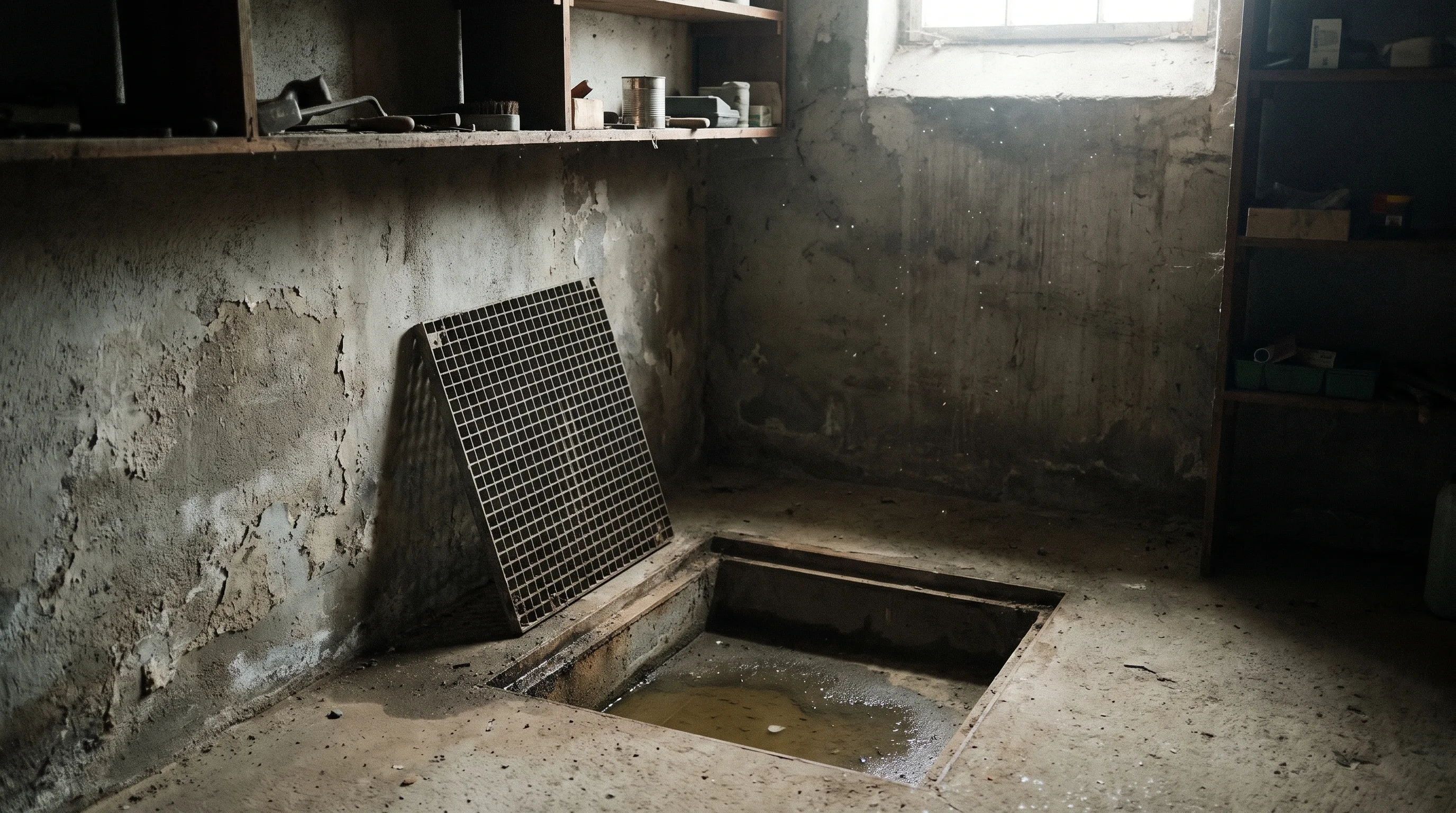
1. The pump is off when the outlet is off
FEMA’s urban flooding guidance for homeowners and renters in Cook County, revised May 2025, says these pumps will not work when the electricity is off. If you want the sump pump to work during a power outage, that guidance says you would need to add battery storage or a generator. It also says the pumps are not designed to handle large amounts of water.
Those two limits are the top of my checklist. A backup is there so the pump can move water on a dead outlet. It is not, on FEMA’s wording, a machine for a large amount of water. I am a homeowner reading the sheets in the order I would walk the pit, not someone wiring your house.
2. Copy Zoeller’s amps and do not invent watts
If the primary pump is a Zoeller 1073 or 1075, the electrical line I will copy is Zoeller At Home instruction SW1139. The sheet prints amps and inrush/locked amps. It does not print watts, and it does not print starting watts. I am not multiplying those amps by 115 V and publishing the product as a watt rating. That figure is not on the sheet.
| Model | HP | Volts | Phase | Running amps | Inrush / locked amps |
|---|---|---|---|---|---|
| 1073 | 1/3 | 115 | 1 | 5.5 A | 9.5 A |
| 1075 | 1/2 | 115 | 1 | 7.8 A | 15 A |
The 1073 is 1/3 HP, 1 phase, 115 volts, 5.5 A running, and 9.5 A inrush/locked. The 1075 is 1/2 HP, 1 phase, 115 volts, 7.8 A running, and 15 A inrush/locked. The 1075’s running and inrush figures on that sheet are higher. That is the difference I can actually cite. It is still an amp difference.
The same instruction is the power rule. Use a grounded 115 V GFCI circuit and a minimum 15 A breaker or fuse. Never use an extension cord. Do not remove the ground pin. Have the circuit checked by an electrician. Installations must conform to the National Electric Code and local codes. Zoeller treats a missing GFCI, or an extension cord, as a shock hazard because a cord can fall into the sump. I will not soften “never an extension cord” into a heavier cord.
3. The BWE battery is not in the box
The dedicated backup on this list is the Basement Watchdog Emergency BWE, manual dated 03-21-25. The carton is not a complete system.
Included, per the manual: a control unit with dual float and battery cables, a pump with a 1-1/2 in PVC adapter, two wire ties, a battery box, and a charger. You supply a Basement Watchdog maintenance-free (AGM) standby battery, model BW-27AGM. If the carton has no battery, that matches the manual.
The manual says the use of automotive batteries is not recommended. The runtime, the alarm, and the age rule below are written for the BW-27AGM on this system, not for a battery pulled out of a vehicle. The controller supply is 115 volts AC, so the wall outlet is part of the backup, not an afterthought. I am not printing a price. This draft does not have one.
4. Keep 80 hours away from the flow lines
The BWE manual says the BW-27AGM is designed to run this system for 80 hours, based on a 10% duty cycle. That sentence does not state a head or a flow. I will not write “80 hours at 10 feet” or “80 hours at 0 feet.”
Pumping capacity is a separate specification: 2,000 GPH at 0 feet, and 1,000 GPH at 10 feet. Those are not a runtime, and they do not say how long the battery lasts at either head. A 10% duty cycle is the condition on the 80-hour line. I am not redefining it as continuous pumping. The manual’s continuous figure is the alarm in the next step, and it is a half hour, not 80 hours.
On the card at the pit I want two notes, not one blended sentence:
- Runtime: 80 hours at a 10% duty cycle. No head. No flow.
- Capacity: 2,000 GPH at 0 feet, and 1,000 GPH at 10 feet. Not a battery-life claim.
5. Treat the alarm as a half hour you cannot mute
When the BWE battery alarm sounds, the manual says you will have a minimum of one-half hour of continuous pumping time to replace the battery. The alarm cannot be silenced. Left unattended, the basement will flood.
That is a go-downstairs alarm, not a chime to mute until morning. The half hour is continuous pumping time left to replace the battery. It is not the 80-hour duty-cycle line, and it is not the gallons-per-hour line.
The same manual says to replace the battery if it is more than five years old. I have not tested a pack, so I am not substituting a basement anecdote for that age line. Write the date down when the BW-27AGM goes in. If the battery is already past five years, the instruction is to replace it.
Test the float periodically, or after any maintenance. The manual says lifting the float runs the pump and turns on the pump light and the alarm until you reset it. That is the test. I would rather do it on a dry day than find a stuck float during the outage.
6. Check both outlets, and do not add a cord
The BWE manual says not to use an extension cord. The outlet must be within the controller cord and at least 4 feet above the floor. Installation must follow the National Electric Code and local codes. Under 110 V at the outlet, the Power alarm turns on. The charger and the power-failure alarm depend on that outlet.
Zoeller’s rule is not the same check. Both forbid an extension cord. Only the primary pump sheet adds the GFCI, the 15 A breaker or fuse, and the ground pin. Only the BWE sheet adds the 4-foot height, the controller-cord reach, and the Power alarm under 110 V. Plugging in the backup does not satisfy the primary pump’s GFCI line, and a GFCI in the pit does not put the controller outlet 4 feet up.
7. A generator does not erase Zoeller’s cord rule
FEMA’s two options are battery storage or a generator. The generator sheet and the pump sheet conflict. I am not reconciling them.
CPSC Publication 5123 says to use heavy-duty outdoor extension cords, with wattage above the connected load, three prongs, long enough to keep the generator outdoors and away from windows, doors, and vents. It also says never plug a generator into a wall outlet to power house wiring. CPSC calls that backfeeding an electrocution risk to utility workers and neighbors.
Zoeller says never use an extension cord on the 1073 or 1075, because a cord can fall into the sump. CPSC’s advice is built around cords to appliances and around not backfeeding a wall outlet. I will not turn that into “run a cord down to the sump,” and I will not turn it into “plug the generator into the basement outlet.” Both instructions stay on the checklist. The CPSC list I can actually copy is the outdoor generator, the heavy-duty three-prong cord with wattage above the connected load, and no backfeed into house wiring. Beside it, Zoeller’s ban on an extension cord stays in force.
8. A permit is for moving wiring, not for plugging the BWE in
The same FEMA guidance says relocating electric panels or outlets must be authorized by permit and done by a licensed electrician. Check the local permit office before work that changes wiring. That sentence is about moving electrical equipment. It is not a permit step for plugging the BWE controller into an outlet that already exists.
Zoeller still says to have that pump’s circuit checked by an electrician. I am not promoting every line here into a permit, and I am not demoting a panel or outlet move into a casual job. If the existing outlet is not within the controller cord, or not at least 4 feet above the floor, fixing that by moving the outlet is a wiring change, and FEMA’s permit line is the one that applies. Adding an extension cord is the fix both the BWE manual and the Zoeller sheet already reject.
9. Point the rest of the outage elsewhere
Battery storage is one of the two options FEMA names. A power station is what I keep for other loads in this house and in the truck-bed camper. I do not have a manufacturer statement, on the pages used here, that one will start a primary AC sump pump, so I will not claim that. There is no sump or BWE affiliate entry on this page, and no price.
After this checklist is filled in, the other loads are a different page:
- What size station for home emergencies
- Gear tiered by outage length
- The power station category
- The wider outage checklist
- Emergency preparedness as a use case
What I am not adding
I am not printing running watts or starting watts. SW1139 stops at amps and inrush/locked amps. I am not printing a BWE pump amp draw; the lines I have are 115 V AC and the two GPH figures. I am not pinning 80 hours to a head. I am not printing a retail price. The sheets above are the whole checklist: FEMA’s limit, Zoeller’s amps and GFCI rule, the BWE contents, the BW-27AGM, the duty-cycle hours kept separate from flow, the alarm, the five-year replacement, the float test, the outlet rules, and the generator warning that does not cancel the cord ban.