EcoFlow DELTA 2 Max
Review
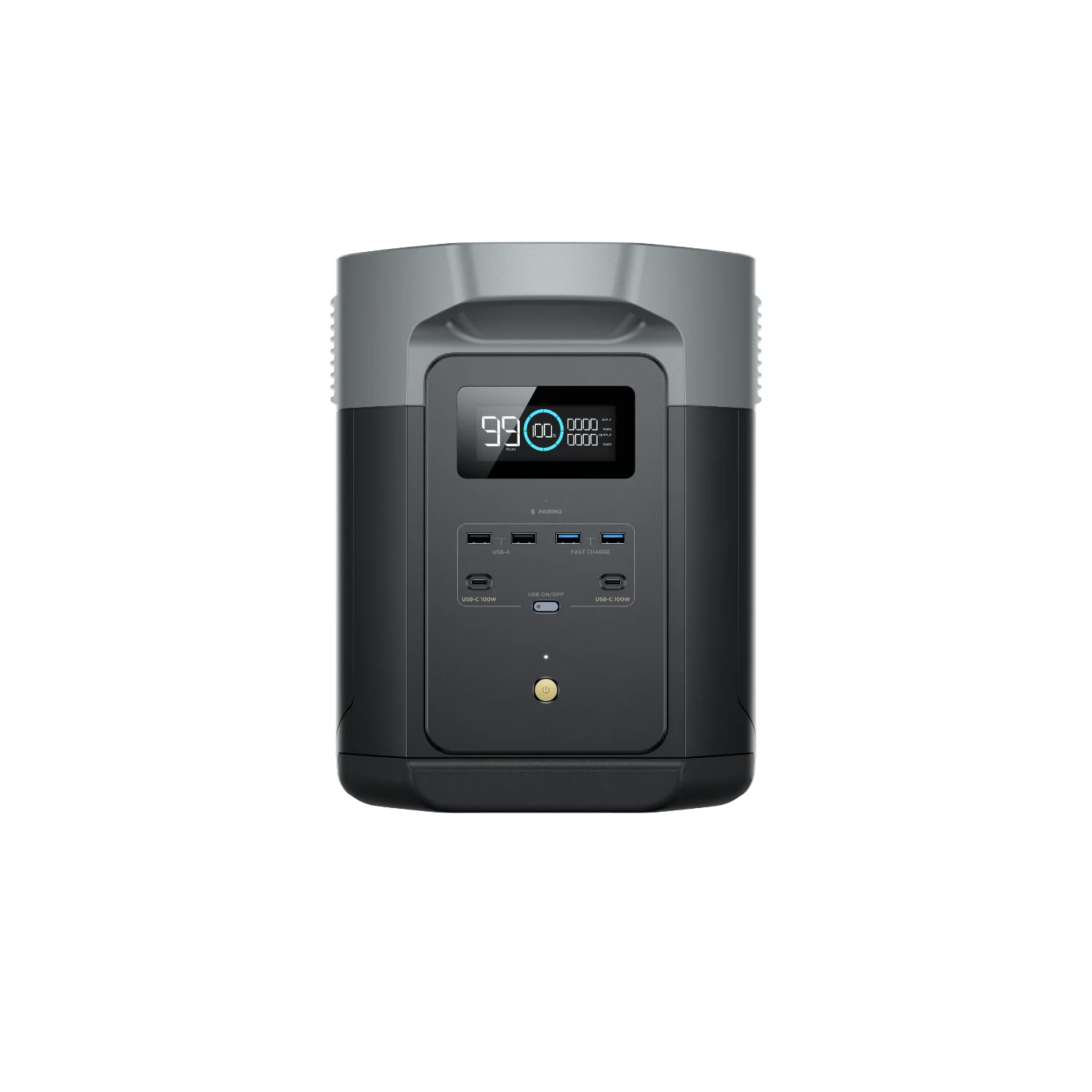
EcoFlow DELTA 2 Max review. 2,048Wh LiFePO4, 2,400W output, expandable to 6kWh. Fast charging, app control, and X-Boost make it a strong all-rounder...
The EcoFlow DELTA 2 Max delivers 2,048Wh of expandable LiFePO4 capacity with 2,400W output and X-Boost to 3,100W. After eight months of real use, here's where it excels and where it falls short.
Our Score
Buy the EcoFlow DELTA 2 Max
Best prices · Updated hourly
Independent, unsponsored reviews backed by real-world testing. We may earn a commission at no extra cost to you.
How we test →The EcoFlow DELTA 2 Max delivers 2,048Wh of expandable LiFePO4 capacity with 2,400W output and X-Boost to 3,100W. After eight months of real use, here's where it excels and where it falls short.
✓ What We Liked
- 2,048Wh LiFePO4 capacity with expandability to 6kWh
- 2,400W output with X-Boost up to 3,400W for demanding appliances
- Full charge in about 1 hour via AC — among the fastest in class
- Smart app with real-time monitoring, scheduling, and firmware updates
- 6 AC outlets plus comprehensive USB-C/USB-A port array
✗ What We Didn't
- 50 lbs — manageable but not truly portable for one person
- 3,000 cycle life is lower than some LiFePO4 competitors
- X-Boost mode reduces efficiency on high-draw appliances
- Being superseded by DELTA 3 series — may see reduced support
The mid-range portable power station market is where most buyers should be looking. The budget units under 1,000Wh run out of power too quickly for anything beyond phone charging and LED lights. The flagship units above 3,000Wh cost $2,500 or more and weigh as much as a small dog. The sweet spot sits right around 2,000Wh: enough capacity for a full day of meaningful power use, portable enough to move when needed, and priced where the investment does not require a second mortgage.
The EcoFlow DELTA 2 Max sits at the center of that sweet spot. At 2,048Wh with LiFePO4 chemistry, expandable up to 6,144Wh, and delivering 2,400W of continuous AC output with X-Boost pushing compatible devices to 3,100W, it promises to be the one power station that handles everything from weekend camping to home backup. I have used it for eight months across RV trips, cabin weekends, backyard power outages, and one memorable ice storm that took out grid power for 36 hours. Here is what I found.
Capacity and Real-World Runtime
The DELTA 2 Max packs 2,048Wh of LiFePO4 battery capacity into a unit that weighs 50.6 lbs. That weight makes it portable in the sense that one person can carry it from a car to a campsite, but you will not want to carry it far. A comfortable carry distance is about 50 feet before you start looking for somewhere to set it down.
Runtime depends entirely on load, and this is where expectations need calibrating. Running a 100W load, the DELTA 2 Max delivers approximately 17-18 hours of runtime, accounting for inverter efficiency losses of roughly 10-12%. A 500W load runs for about 3.5 hours. At the full 2,400W continuous output, you get approximately 45 minutes. These numbers are consistent with the rated capacity and typical inverter efficiency.
For my typical use case, powering a 12V compressor fridge (50-60W average draw), charging phones and laptops (30-50W intermittent), and running LED work lights (20W), the DELTA 2 Max easily lasts a full weekend without recharging. On the 36-hour power outage, it kept the kitchen fridge running (120W cycling compressor, averaging about 40W), charged all household phones and tablets, and powered a few LED lamps. It reached 12% state of charge when the grid came back, which was closer than I would have liked but still functional.
X-Boost: 2,400W to 3,100W
EcoFlow’s X-Boost technology uses voltage regulation to power devices rated above the inverter’s continuous output by reducing voltage while maintaining current. In practice, this means the DELTA 2 Max can run devices rated up to 3,100W, but those devices may operate at reduced performance.
I tested X-Boost with a 1,500W space heater (ran perfectly at full output, well within the native 2,400W), a 2,200W hair dryer (ran with noticeably reduced heat output), and a 2,800W portable induction cooktop (ran at reduced power, enough to boil water slowly but not ideal for actual cooking). X-Boost is useful for occasional, short-duration use of high-wattage appliances but should not be considered equivalent to true 3,100W output. For anything you plan to run regularly at high wattage, size your power station for native output, not X-Boost capacity.
Expandable to 6,144Wh
The DELTA 2 Max accepts up to two EcoFlow DELTA 2 Max Extra Batteries, each adding 2,048Wh for a maximum system capacity of 6,144Wh. The extra batteries connect via a proprietary cable and are managed by the main unit’s BMS. This expandability is the DELTA 2 Max’s strongest strategic feature.
You can start with the base unit at $2,000 and add capacity later. Each extra battery runs approximately $1,600, bringing the full 6,144Wh system to roughly $5,200. I purchased one extra battery after four months, bringing my total to 4,096Wh. The combined system handles a full long weekend at the cabin without solar input, though at 101 lbs combined, it stays in one place once set up.
Charging Speed
The DELTA 2 Max charges from wall AC at up to 2,400W, reaching 0-80% in 43 minutes and full charge in about 90 minutes. This is remarkably fast and one of EcoFlow’s genuine differentiators. When the grid came back after the ice storm, I plugged in the depleted unit and had it back to 80% before lunch.
Solar charging supports up to 1,000W of input. With two EcoFlow 400W panels, I measured 650-720W on clear days, reaching full charge in about 3-4 hours from 20%. Car charging via the 12V port is painfully slow at 96W maximum. For road trips, plan to charge from AC at your destination.
DELTA 2 Max vs. BLUETTI AC200MAX
The BLUETTI AC200MAX is the most direct competitor at similar capacity (2,048Wh) and price ($1,800-2,000). The comparison is closer than either company would like.
The AC200MAX uses LiFePO4 chemistry with 3,500-cycle rated life versus the DELTA 2 Max’s 3,000 cycles. The BLUETTI also expands to 8,192Wh with two B300 expansion batteries, offering more maximum capacity than EcoFlow’s 6,144Wh ceiling. On these specifications, the BLUETTI has a slight edge.
The DELTA 2 Max counters with significantly faster AC charging (43 minutes to 80% versus 3-4 hours for the AC200MAX), a more refined app experience, and the broader EcoFlow ecosystem that includes smart home panel integration and smart generator auto-start for whole-home backup scenarios. If speed of recharging matters, the EcoFlow wins decisively. If maximum expandable capacity or slightly longer cycle life is your priority, the BLUETTI edges ahead.
In daily use, both perform comparably. My preference for the DELTA 2 Max comes down to charging speed and the EcoFlow app, but I would not argue with anyone who chose the AC200MAX, especially at BLUETTI’s frequently lower sale prices.
The EcoFlow Ecosystem Advantage
Where EcoFlow pulls ahead is ecosystem integration. The DELTA 2 Max connects to the EcoFlow Smart Home Panel for automatic home backup during outages, works with the Smart Generator for auto-recharging when battery levels drop, and the app manages all connected devices from a single interface. No other portable power station manufacturer offers this level of home integration at this price point.
Build Quality and Reliability
After eight months, the DELTA 2 Max shows no physical wear beyond minor scuffs. The AC outlets maintain firm connections, USB ports are solid, and the screen remains bright. The fan is audible under load but silent at idle. Two firmware updates via the app have gone smoothly, adding features rather than just fixing bugs.
Who Should Buy the EcoFlow DELTA 2 Max
Buy it if you want a mid-range power station with room to grow through expansion batteries, fast AC charging speed is important to you, you are interested in whole-home backup integration through the EcoFlow ecosystem, or you need 2,000-6,000Wh of capacity without committing to a single massive unit.
Skip it if you need maximum expandable capacity (the BLUETTI system goes higher), you are weight-sensitive and need something more portable, your primary charging source is a car’s 12V outlet, or your budget is better served by a smaller unit that actually matches your usage.
The Bottom Line
The EcoFlow DELTA 2 Max does not dominate any single specification, but it wins on the combination. The 2,048Wh base capacity, expandability to 6,144Wh, 2,400W output, and class-leading AC charging speed create a power station that adapts to scenarios ranging from weekend camping to multiday power outages. Eight months of varied use have confirmed that the DELTA 2 Max is the most versatile portable power station in its class. It is not the cheapest, the lightest, or the highest-capacity option, but it is the one that handles the widest range of real-world situations without compromise. For most buyers, that versatility is exactly what makes it the right choice.
Shop
Ready to buy the EcoFlow DELTA 2 Max?
Check the latest price and availability.
Check Price on EcoFlow