Jackery Explorer 300
Review
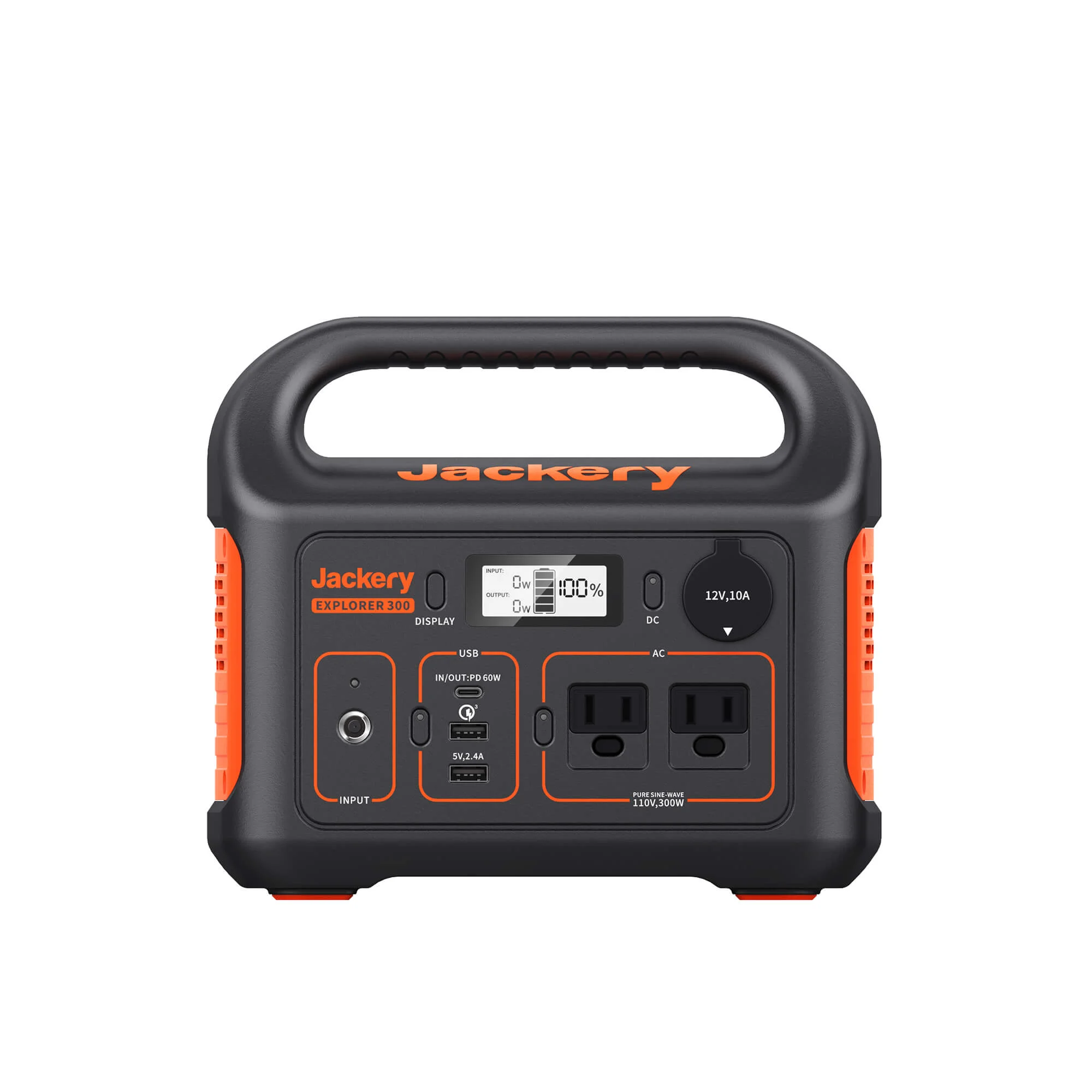
Jackery Explorer 300 review. 293Wh, 300W output, only 7.1 lbs. A budget-friendly ultralight portable power station for backpacking, day trips, and...
The Jackery Explorer 300 is one of the lightest AC power stations at 7.1 pounds, but its Li-NMC battery with only 500 cycles makes it hard to recommend over the EcoFlow RIVER 3.
Our Score
Buy the Jackery Explorer 300
Best prices · Updated hourly
Jackery · Direct
Jackery
★ Lowest PriceAmazon · Prime
Amazon
Independent, unsponsored reviews backed by real-world testing. We may earn a commission at no extra cost to you.
How we test →The Jackery Explorer 300 is one of the lightest AC power stations at 7.1 pounds, but its Li-NMC battery with only 500 cycles makes it hard to recommend over the EcoFlow RIVER 3.
✓ What We Liked
- Only 7.1 lbs — one of the lightest power stations with AC output
- Compact footprint fits easily in a backpack or car trunk
- 60W USB-C PD port charges laptops and phones quickly
- Budget-friendly entry point under $250 on sale
- Pure sine wave AC output for sensitive electronics
✗ What We Didn't
- 293Wh capacity limits runtime to small devices and short trips
- 300W output cannot run high-draw appliances
- Li-NMC battery with only ~500 cycle life — shortest in class
- 100W max solar input means slow off-grid recharging
- No app control or wireless connectivity
The Jackery Explorer 300 was one of the original ultra-portable power stations, and it still shows up in every “best of” list by sheer momentum. At 7.1 pounds and 293Wh, it is genuinely tiny. But in 2026, the battery chemistry tells you everything you need to know about whether you should buy it.
The Weight Advantage
I will give the Explorer 300 this: 7.1 pounds is featherweight for a station with AC output. It fits in a backpack side pocket, a bike pannier, or a camera bag. The footprint is 9.1 x 5.2 x 7.8 inches, which is smaller than most hardcover books stacked two deep. If absolute minimum weight is your deciding factor, the Explorer 300 is one of the lightest options that still gives you two AC outlets.
The 300W continuous output runs laptops, charges phones, powers LED lights, and handles small fans. The 60W USB-C PD port is useful for fast-charging modern devices. Pure sine wave AC output means your electronics are safe. For a day hike, a photography outing, or a single-night car camping trip with minimal loads, the Explorer 300 does its job without complaint.
At a street price around $249, it is also accessible. You do not need to agonize over the purchase.
The Battery Problem
Here is where it falls apart: Li-NMC chemistry rated at roughly 500 cycles. That is not a typo. Five hundred cycles to 80% capacity. If you use this station three times a week, you will hit 500 cycles in about three years. The battery will still work after that, but at diminished capacity — and 293Wh diminished by 20% is only 234Wh, which barely charges a laptop twice.
The EcoFlow RIVER 3 costs about the same, weighs only 0.7 pounds more at 7.8 pounds, and uses LiFePO4 cells rated at 3,000 cycles. That is six times the lifespan. The RIVER 3 also has IP54 dust and splash resistance, app control, and faster AC charging at 60 minutes versus the Explorer 300’s 2.5 hours. On every metric except raw weight, the RIVER 3 wins.
No app control, no Bluetooth, no IP rating. The Explorer 300 feels like a product from 2022 that has not been updated.
Who Should Buy It
Buy the Explorer 300 if you find it heavily discounted (under $175) and need the absolute lightest AC power station for occasional use. It still works fine for infrequent weekend trips where cycle life is not a concern.
Skip it at full price. The EcoFlow RIVER 3 is better in nearly every way for the same money. Unless you specifically need those 0.7 fewer pounds, the RIVER 3’s LiFePO4 longevity, faster charging, and app support make it the smarter purchase. The Explorer 300 was great in its era, but the market has moved on.
Ready to buy the Jackery Explorer 300?
Check the latest price and availability.
Check Price on Jackery