BioLite SolarPanel 100 vs Goal Zero Nomad 50 Foldable Solar Panel
BioLite SolarPanel 100 vs Goal Zero Nomad 50 Foldable Solar Panel compared spec-by-spec. Rated output, efficiency, pricing, pros, cons, and our verdict on which solar panel to buy.
| Specification | B — goal-zero Goal Zero Nomad 50 Foldable Solar Panel 7.8/10 $200 Check Price on Amazon $225
Save $25 | |
|---|---|---|
| Wattage | 100 | 50 |
| Panel Type | monocrystalline | monocrystalline |
| Weight | 11.13 lbs | 6.85 lbs ✓ Winner |
| Dimensions | 20.1 x 57.5 x 1 in (unfolded) | 17 x 53 x 1.5 in (unfolded) |
| Folded Dimensions | 20.1 x 14.25 x 1.5 in | 17 x 11.25 x 2.5 in |
| Connector Type | HPP + USB-C (45W PD) + 2x USB-A | 8mm + USB-A |
| Warranty | 1 years | 2 years ✓ Winner |
| Foldable | Yes | Yes |
| Voc | 23.7 | 21.5 |
| Isc | 5.3 | — |
| Vmp | 19.8 | 18 |
| Imp | 5 | — |
| Operating Temp | 14-113F | 32-113F |
| Cells | monocrystalline | monocrystalline silicon |
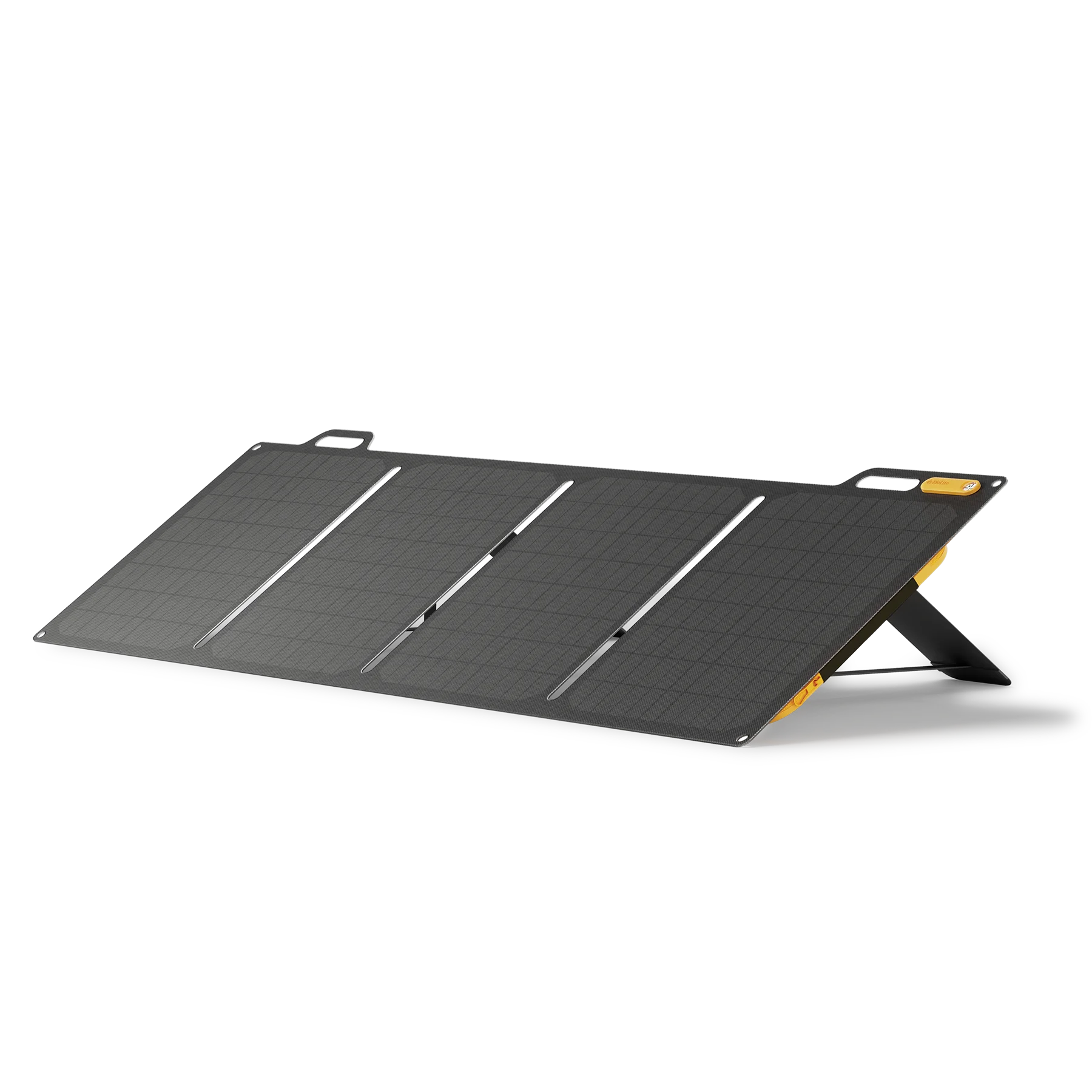
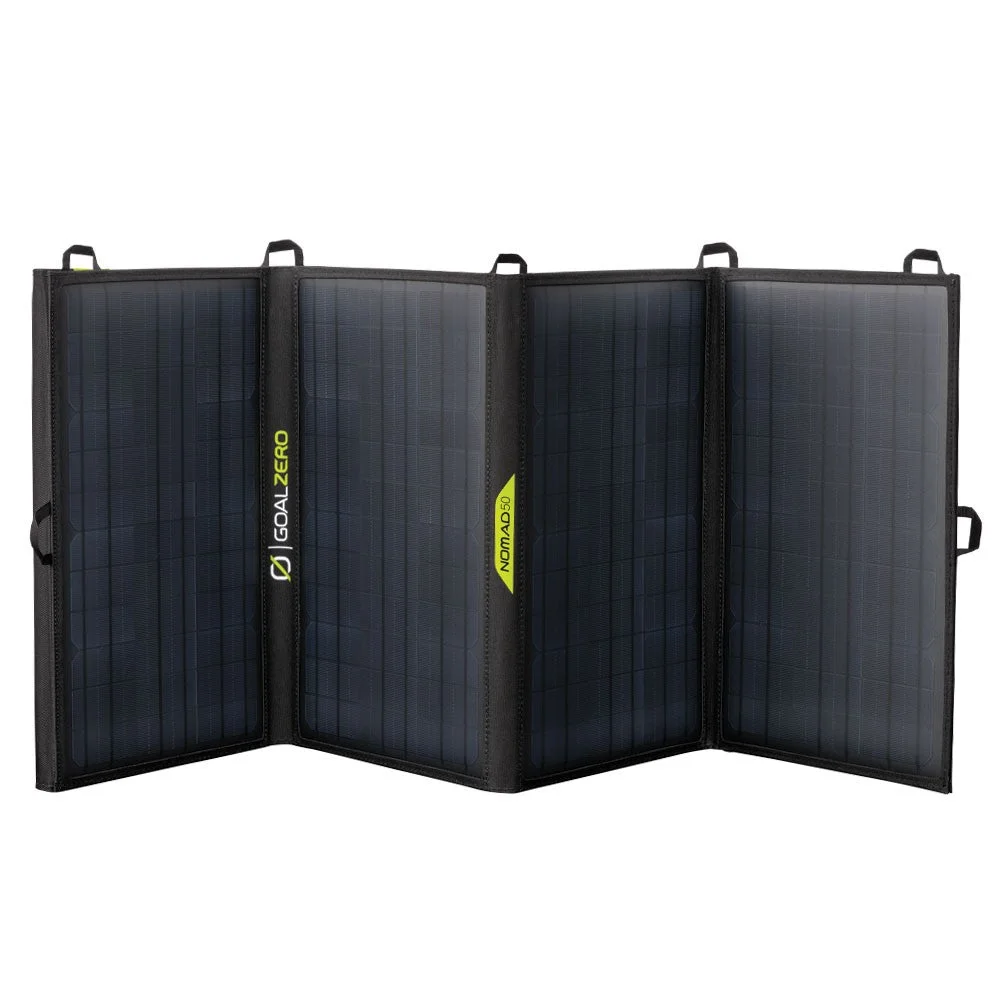
| Frame | fabric with integrated sundial | four-panel folding case with hanging loops |
| Kickstand | Yes | — |
Buy the BioLite SolarPanel 100
Typical prices · Check the retailer for today's price
Buy the Goal Zero Nomad 50 Foldable Solar Panel
Typical prices · Check the retailer for today's price
Who Should Buy the BioLite SolarPanel 100?
The BioLite SolarPanel 100 is the right fit for camping foldable, portable power stations, backpacking. At 100W, it works well as a compact, flexible charging option.
Key advantages include: integrated analog sundial for optimal sun alignment; built-in usb-c and usb-a ports for direct device charging; 11.1 lbs with a built-in 3.5 m cable. At 11.13 lbs, it's manageable for rooftop and portable installs.
At $300 ($3.00/W), the BioLite SolarPanel 100 scores 7.9/10 — a capable option for budget-conscious buyers.
Who Should Buy the Goal Zero Nomad 50 Foldable Solar Panel?
The Goal Zero Nomad 50 Foldable Solar Panel is the right fit for camping foldable, backpacking ultralight, portable power stations. At 50W, it works well as a compact, flexible charging option.
Key advantages include: lightweight at 6.85 lbs — easy to pack and carry; built-in usb-a port for direct device charging; chainable with other nomad panels for more power. At 6.85 lbs, it's manageable for rooftop and portable installs.
At $200 ($4.00/W), the Goal Zero Nomad 50 Foldable Solar Panel scores 7.8/10 — a capable option for budget-conscious buyers.
How Do the Specs Compare?
Wattage: The BioLite SolarPanel 100 puts out more power at 100W versus 50W for the Goal Zero Nomad 50 Foldable Solar Panel. Higher wattage means faster charging and more energy harvested per square foot of roof or ground space — a priority for larger systems.
Weight: The Goal Zero Nomad 50 Foldable Solar Panel weighs 6.85 lbs versus 11.13 lbs for the BioLite SolarPanel 100. Both are similarly sized for mounting purposes.
Cost per watt: The BioLite SolarPanel 100 offers better value at $3.00/W versus $4.00/W. Cost-per-watt is the most useful metric for comparing solar panels at different wattage levels.
Price: The Goal Zero Nomad 50 Foldable Solar Panel costs $200 versus $300 for the BioLite SolarPanel 100 — a $100 difference. When scaling to a multi-panel system, that per-panel cost difference compounds quickly.
🏆 Our Verdict
Choose the BioLite SolarPanel 100 if you need higher performance and top-tier efficiency.
Choose the Goal Zero Nomad 50 Foldable Solar Panel if you prioritize value (typically $100 less) , portability (6.85 lbs vs 11.13 lbs).
Related
Go Deeper
More Comparisons