LifeStraw Sip Essential vs Sawyer Mini Water Filter
LifeStraw Sip Essential vs Sawyer Mini Water Filter compared spec-by-spec. Filtration performance, flow rate, pricing, pros, cons, and our verdict on which water filter to buy.
| Specification | A — lifestraw LifeStraw Sip Essential 8.0/10 $20
Price unavailable
| |
|---|---|---|
| Filter Type | membrane microfilter straw | hollow fiber membrane |
| Weight Oz | 0.7 | 2 |
| Contaminants Removed | bacteria, protozoa, microplastics | bacteria, protozoa, microplastics |
| Straw Only | Yes | — |
| Requires Power | No | No |
| Virus Removal | No | No |
| Flow Rate | — | 0.5 L/min |
| Filter Life Gallons | — | 100,000 |
| Pore Size | — | 0.1 micron absolute |
| Bpa Free | — | Yes |
| Backflush Capable | — | Yes |
| Includes Pouches | — | Yes |
| Pouch Capacity Oz | — | 16 |
| Operating Temp | — | above freezing |
| Made In | — | USA |
Buy the LifeStraw Sip Essential
Best prices · Updated hourly
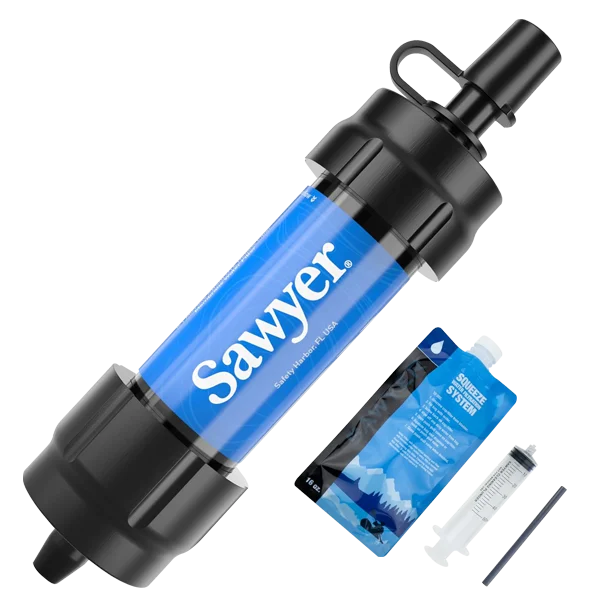
Buy the Sawyer Mini Water Filter
Best prices · Updated hourly
Who Should Buy the LifeStraw Sip Essential?
The LifeStraw Sip Essential is designed for backpacking ultralight, under 50, camping hiking. As a membrane microfilter straw, it handles bacteria and protozoa — appropriate for most backcountry and domestic use cases.
Key advantages include: 0.7 oz — lifestraw's lightest water filter straw ever made; $19.95 is one of the most affordable ways to make backcountry water safe; membrane microfilter removes bacteria, protozoa, and microplastics. At 0.7 oz, it's ultralight and fits in any kit.
Priced at $19.95, the LifeStraw Sip Essential scores 8/10 in our testing — an excellent performer across our key metrics.
Who Should Buy the Sawyer Mini Water Filter?
The Sawyer Mini Water Filter is designed for camping hiking, emergency preparedness, under 50. As a hollow fiber membrane, it handles bacteria and protozoa — appropriate for most backcountry and domestic use cases.
Key advantages include: incredibly affordable at around $20 — best value per gallon filtered; only 2 oz — among the lightest filters on the market; 100,000-gallon filter life is virtually unlimited for most users. At 2 oz, it's ultralight and fits in any kit.
Priced at $20, the Sawyer Mini Water Filter scores 7.5/10 in our testing — a reliable choice for its price bracket.
How Do the Specs Compare?
Filter type: The LifeStraw Sip Essential is a membrane microfilter straw while the Sawyer Mini Water Filter is a hollow fiber membrane. Different filter types suit different scenarios — consider your primary use case when choosing between them.
Filtration performance: The Sawyer Mini Water Filter scores higher on filtration at 8.5/10 versus 7.5/10 for the LifeStraw Sip Essential. Both provide reliable protection for their intended use cases.
Portability: The LifeStraw Sip Essential is lighter at 0.7 oz versus 2 oz for the Sawyer Mini Water Filter. For backpacking and wilderness travel, every ounce counts — but for car camping or emergency preparedness, weight is less critical than capacity and ease of use.
Price: The LifeStraw Sip Essential costs $19.95 versus $20 for the Sawyer Mini Water Filter — a $0.05 difference. At this price parity, the decision comes down to filtration scope and use case fit.
🏆 Our Verdict
Choose the LifeStraw Sip Essential if you need top-tier filtration performance and strong value for the price.
Choose the Sawyer Mini Water Filter if you prioritize premium features and build quality .
Related
Go Deeper
More Comparisons