1
Reverse osmosis is the gold standard for water purification — removing PFAS, fluoride, arsenic, lead, nitrates, and virtually every dissolved solid. Portable countertop RO systems deliver this performance with no plumbing required. Below: our ranked top picks.
Ranked by overall score from our independent testing methodology. Click any card for the full review.
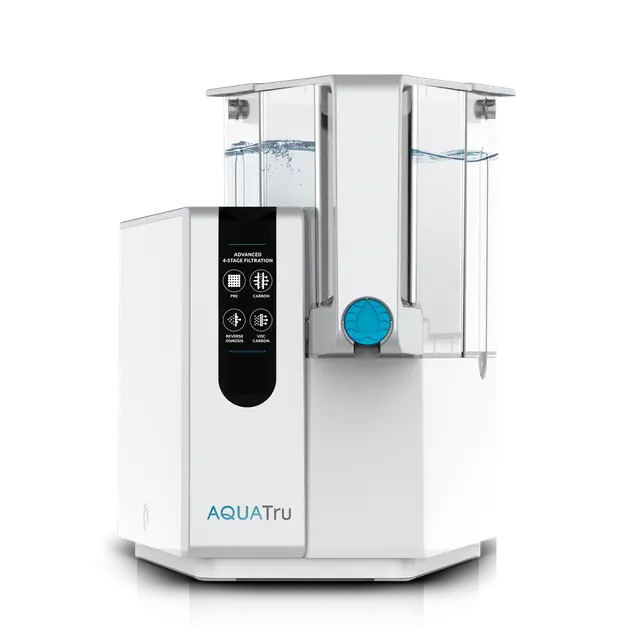
AquaTru
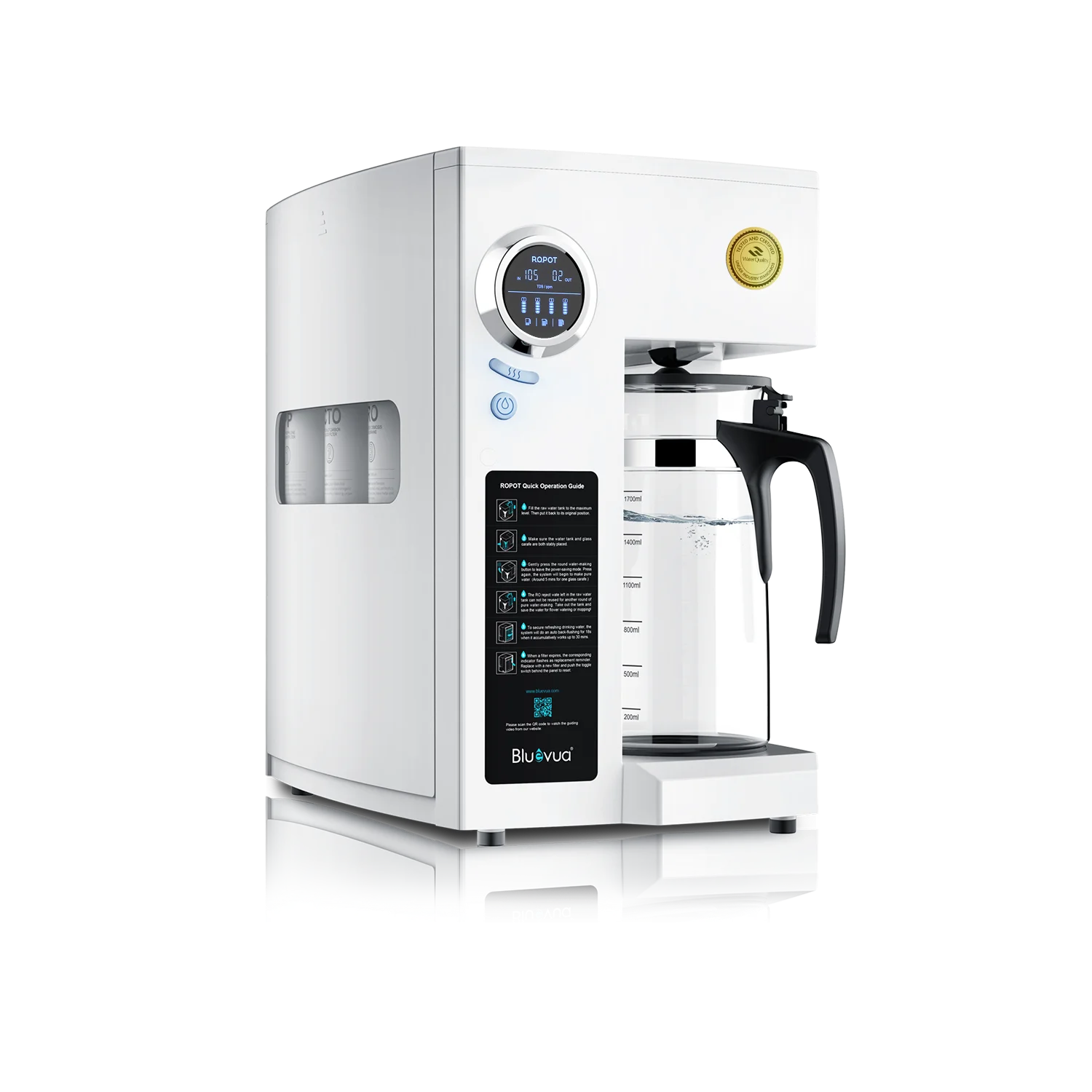
Bluevua
| Spec | AquaTru Under Sink Reverse Osmosis | AquaTru Countertop Reverse Osmosis Purifier | Bluevua RO100ROPOT Countertop Reverse Osmosis System |
|---|---|---|---|
| Our Score | 8.5/10 | 8.4/10 | 8.0/10 |
| Price | $395 | $450 | $250 |
| Filter Type | under-sink reverse osmosis | 4-stage reverse osmosis | reverse osmosis |
| Tank Capacity | — | 0.75 gal | — |
| Filter Life | — | 1,200 gal | — |
| Needs Power | — | Yes | Yes |
| Virus Removal | Yes | Yes | Yes |
| Removes | PFAS, plus 84 total certified contaminants | bacteria, protozoa, viruses, PFAS/PFOA, lead, fluoride, arsenic, chlorine, nitrates, heavy metals, pharmaceuticals, microplastics, VOCs | TDS, PFAS, PFOA, PFOS, chlorine, fluoride, arsenic, lead, heavy metals, pesticides, microplastics |
Reverse osmosis forces water through a semi-permeable membrane with pores so small that only water molecules pass through. Dissolved contaminants — including salts, metals, chemicals, and microorganisms — are too large to fit through the membrane and are flushed away as waste water.
A portable countertop RO system typically uses three or four filtration stages. First, a sediment pre-filter removes particles and debris to protect the membrane. Next, an activated carbon pre-filter removes chlorine, which would damage the RO membrane over time. Then water passes through the RO membrane itself, where 95 to 99 percent of dissolved solids are removed. Some systems add a final carbon polishing filter to improve taste.
The internal electric pump generates the 40 to 80 PSI of pressure needed to push water through the membrane. Most units produce 0.3 to 0.8 gallons per hour, so they work best as a batch process. The reject water containing concentrated contaminants is collected separately — many off-grid users repurpose this for washing dishes, plants, or flushing toilets.