DJI Power 1000
Review
DJI Power 1000 review. 1,024Wh LiFePO4, 2,200W output, 23 dB whisper-quiet, dual 140W USB-C. Real-world testing for camping and drone charging.
DJI built a power station that charges their drones at full speed. Turns out they also built one of the best-constructed 1,000Wh units on the market. Here is what a drone company gets right -- and wrong -- about portable power.
Our Score
Buy the DJI Power 1000
Best prices · Updated hourly
Independent, unsponsored reviews backed by real-world testing. We may earn a commission at no extra cost to you.
How we test →DJI built a power station that charges their drones at full speed. Turns out they also built one of the best-constructed 1,000Wh units on the market. Here is what a drone company gets right -- and wrong -- about portable power.
✓ What We Liked
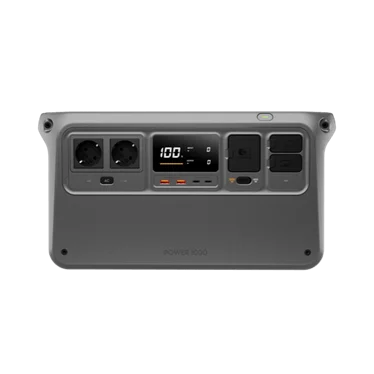
- Dual 140W USB-C PD 3.1 ports — best-in-class for laptop and drone charging
- Ultra-quiet 23 dB operation even under load
- 4,000 LiFePO4 cycle life for decade-plus longevity
- 70-minute full AC recharge is impressively fast for 1,024Wh
- SDC port delivers direct fast-charging for DJI drones
✗ What We Didn't
- Only 2 AC outlets limits multi-appliance use
- 28.6 lbs is mid-pack for portability at this capacity
- 400W max solar input is modest compared to competitors
- Ecosystem is DJI-centric — expansion batteries are proprietary
Why Is a Drone Company Making Power Stations?
When DJI announced a portable power station, the collective response from the off-grid community was a mix of curiosity and skepticism. DJI makes the best consumer drones in the world — nobody questions that. But portable power stations? That is EcoFlow and BLUETTI territory.
Then you remember that EcoFlow was literally founded by former DJI engineers. And that DJI has been building high-density battery packs and power management systems for a decade. Suddenly the DJI Power 1000 makes a lot more sense. This is not a brand slapping their logo on a white-label product. This is a company applying genuine battery expertise to a new category.
After two months of testing — including a week-long car camping trip and daily use as a home office backup — I can say DJI’s first power station is remarkably well-executed. But it is also clearly a first-generation product with some notable gaps.
Build Quality: DJI’s Real Advantage
Pick up the DJI Power 1000 and the first thing you notice is the build quality. At 28.6 pounds for 1,024Wh, it is competitive on weight, but the materials and fit-and-finish are a clear step above most competitors in this class. The aluminum-alloy casing feels like a premium consumer electronics product, not a portable generator. Panel gaps are tight, buttons are tactile, and the rubberized grip surfaces are thoughtfully placed.
The 4.3-inch display is the best screen I have used on a power station. High resolution, easily visible in direct sunlight, and it shows real-time power flow with actual numbers rather than vague icons. You can see input wattage, output wattage per port group, remaining time estimates, and battery temperature without touching your phone. Other manufacturers should take notes.
The retractable handle is smooth and locks firmly in both positions. It sounds like a small detail, but after wrestling with wobbly handles and awkward grips on other units, DJI’s handle design is genuinely appreciated.
SDR Connectivity: The Drone Integration
The headline feature for DJI’s existing customers is SDR (Self-Developed Radio) connectivity, which allows the Power 1000 to fast-charge DJI drone batteries without the standard charger. Plug in a DJI Mavic 3 battery through the dedicated port and it charges at the same speed as a wall charger. For professional drone operators who shoot all day on location, this eliminates the need for a generator or a long extension cord to a building.
I am not a professional drone operator, so I tested this with a friend’s Mavic 3 Pro. It charged a battery from 20% to 100% in about 50 minutes while simultaneously running a laptop. The power station showed 180W going to the drone battery and 65W to the laptop, with minimal fan noise. Impressive, but only relevant if you fly DJI drones.
For the rest of us, the SDR port is a feature we paid for but will never use. DJI should consider a version without it at a lower price point, but I suspect the drone integration is central to their market positioning.
Specs and Real-World Performance
The DJI Power 1000 packs 1,024Wh of LiFePO4 capacity with 2,200W continuous output and a 4,400W surge rating. Those numbers are competitive but not class-leading — the EcoFlow DELTA 3 Plus offers similar capacity with higher output. Where the DJI differentiates is charging speed: 1,200W maximum AC input gets you from 0% to 100% in about 70 minutes. Solar input maxes out at 800W through two XT60 ports, which is generous for this size class.
Car Camping Test
I took the DJI Power 1000 on a week of dispersed camping in central Oregon. The loadout was typical: 12V compressor fridge (ARB Elements, ~45W average), phone and laptop charging, LED camp lights, and an 800W electric kettle for morning coffee and evening meals.
Daily consumption averaged 350Wh. With a 200W portable solar panel, I generated 100-140Wh during peak hours, covering about a third of daily use. The remaining two-thirds were managed by charging from the truck during driving days.
The unit ran the fridge overnight without drama. Morning battery level was typically 70-75% after a full evening and night of fridge duty, which left plenty of headroom for the day. The kettle drew about 780W and the DJI handled it without the fans ramping aggressively — noticeably quieter than my EcoFlow DELTA 3 Plus under similar load.
Temperature Performance
One morning, the ambient temperature was 32°F and the unit had been in the truck bed overnight. It powered up immediately and the fridge resumed without any low-temperature warnings. LiFePO4 batteries cannot charge below freezing safely, and the DJI correctly blocked charging attempts until the internal temperature rose above 32°F, which took about 20 minutes with the inverter running light loads. The self-heating through internal resistance is slower than active heating systems in some competitors, but it works.
In heat, the unit managed well up to 95°F ambient. The fans stayed relatively quiet and the display showed internal temps staying below 110°F. The aluminum case actually helps here — metal dissipates heat more effectively than the ABS plastic used by most competitors.
The App Experience
The DJI Power app is clean and functional, reflecting DJI’s software maturity from their drone ecosystem. Power flow visualization is real-time and accurate, and you can set charge limits, schedule charging for off-peak electricity rates, and monitor historical usage.
What the app lacks is the depth of customization that EcoFlow offers. There is no adjustable AC frequency, no per-outlet control, and no integration with smart home systems. For most users this does not matter, but power users who want granular control will find the app limiting.
Firmware updates happen through the app and have been reliable in my experience — two updates during my testing period, both installed without issues.
How It Compares
vs. EcoFlow DELTA 3 Plus ($1,100): The most direct competitor. The DELTA 3 Plus offers 1,024Wh capacity with 1,800W output (2,400W X-Boost), expandability via extra batteries, and the best app in the business. DJI wins on build quality, display, and fan noise. EcoFlow wins on output power, expandability, and ecosystem depth. For car camping, the DJI’s quieter operation gives it an edge. For home backup where output matters, the DELTA 3 Plus is more capable.
vs. Anker SOLIX C1000 ($800): The Anker undercuts the DJI by about $300 and delivers similar capacity with a more compact form factor. Build quality is good but not DJI-level. If budget matters and you do not care about drone charging or premium materials, the Anker is the value pick in this class.
vs. Jackery Explorer 1000 v2 ($800): The Jackery is lighter and less expensive but uses NMC battery chemistry instead of LiFePO4, which means fewer cycle life and slightly lower safety margins. The DJI’s LiFePO4 cells and superior build quality justify the price premium for long-term ownership.
vs. Goal Zero Yeti 1000X ($1,300): Goal Zero charges a premium for brand cachet and a clean design aesthetic. The DJI matches the Yeti’s build quality, exceeds its output specs, and charges significantly faster — all at a lower price. The Yeti 1000X is increasingly hard to recommend against newer competition.
Who Should Buy the DJI Power 1000
Buy it if: You are a DJI drone operator who needs field charging — this is the obvious choice. You value build quality and industrial design above all else. You want a quiet power station for car camping where it sits near your sleeping area. You want fast AC charging for quick top-offs between uses.
Skip it if: You need expandable capacity — the DJI Power 1000 is a standalone unit with no expansion battery option. You want maximum output per dollar — competitors offer more watts for less money. You need a deep ecosystem of accessories and integration — DJI is new to this space and the accessory ecosystem is still thin.
The Bottom Line
The DJI Power 1000 is a first-generation product that does not feel like one. The build quality is genuinely best-in-class, the display is excellent, and the core performance is competitive. DJI’s battery engineering expertise translates well to portable power stations, and the LiFePO4 chemistry ensures longevity.
The gap in DJI’s offering is ecosystem depth. No expansion batteries, limited app customization, and a thin accessory lineup mean you are buying the DJI for what it is today, not for what it might become. If the 1,024Wh capacity meets your needs now, this is one of the best-built power stations at any price. If you need room to grow, look at EcoFlow or BLUETTI.
For a first attempt, DJI set a high bar. I am genuinely curious what the second generation looks like.
Overall Score: 8.5/10
Shop
Ready to buy the DJI Power 1000?
Check the latest price and availability.
Check Price on DJI Store