Anker SOLIX C1000 vs DJI Power 1000
Comparing Anker SOLIX C1000 vs DJI Power 1000: Anker SOLIX C1000 scores 8.9/10 and DJI Power 1000 scores 8.6/10 in our benchmark testing. Anker SOLIX C1000 wins overall — Anker SOLIX C1000 scores higher on power and features while DJI Power 1000 offers competitive performance.
Anker SOLIX C1000 (1056Wh) vs DJI Power 1000 (1024Wh) compared spec-by-spec. Real-world testing, pricing, pros, cons, and our verdict on which power station to buy.
| Specification | ||
|---|---|---|
| Capacity | 1,056Wh ✓ Winner | 1,024Wh |
| AC Output | 1,800W | 2,200W ✓ Winner |
| Surge Output | 2,400W | 2,600W ✓ Winner |
| Weight | 28 lbs ✓ Winner | 28.6 lbs |
| Dimensions | 14.7 x 8.3 x 10.1 in | 17.6 x 8.9 x 9.1 in |
| Battery Type | LiFePO4 | LiFePO4 |
| Cycle Life | 3,000 cycles | 4,000 cycles ✓ Winner |
| AC Charge Time | 58 min | 70 min (0-100%) |
| Max Solar Input | 600W ✓ Winner | 400W |
| AC Outlets | 6 ✓ Winner | 2 |
| USB-C Ports | 2 | 2 |
| USB-A Ports | 2 | 2 |
| DC Outlets | 2 | 2 |
| Expandable | No | Yes |
| Operating Temp | 32-104F | 32-113°F |
| Warranty | 5 years | 5 years |
| App Control | Yes | Yes |
| Max Expanded | — | 3,072Wh |
| Ip Rating | — | N/A |
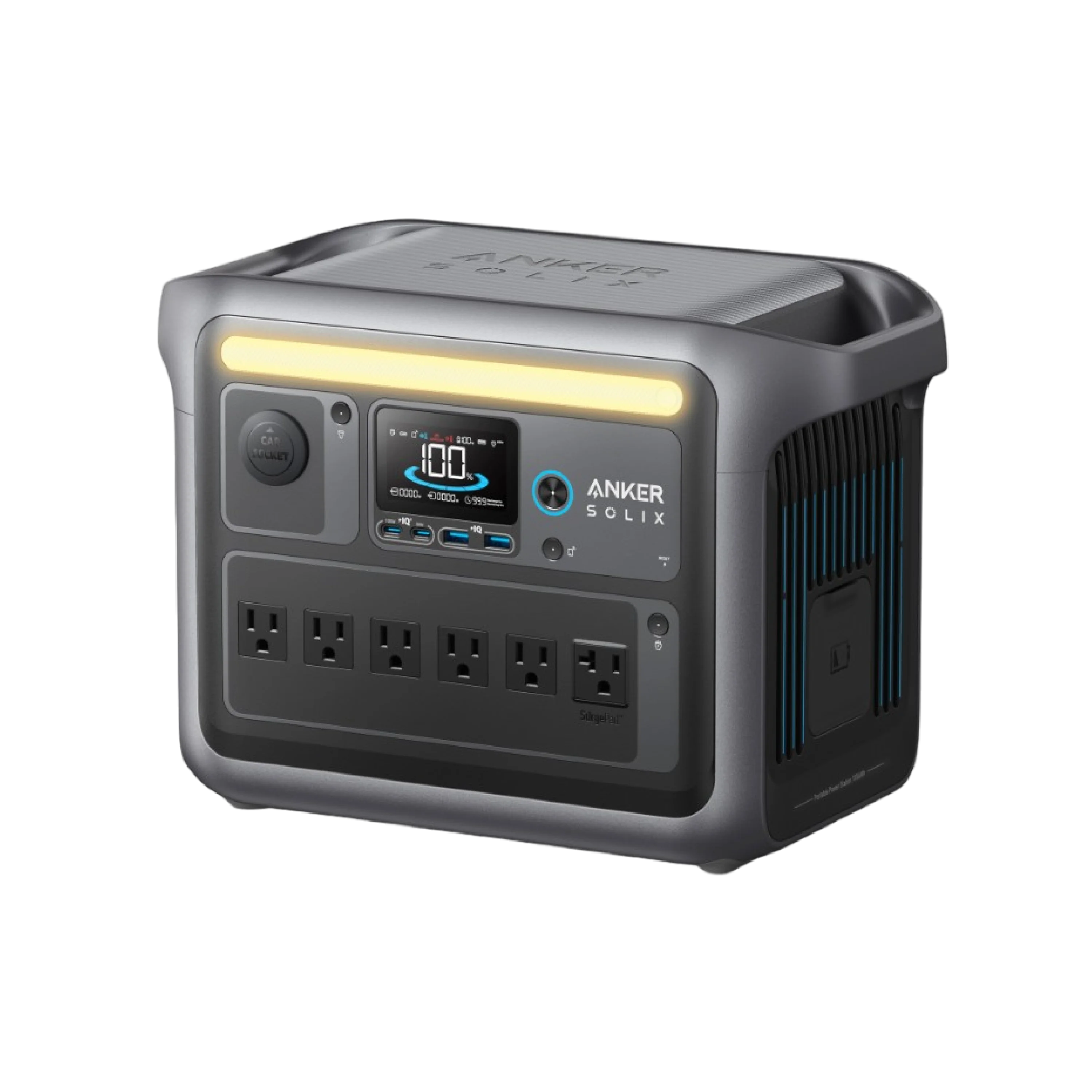
Buy the Anker SOLIX C1000
Best prices · Updated hourly
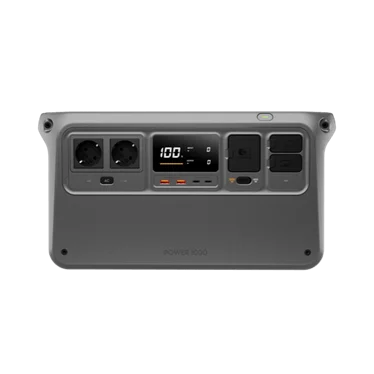
Buy the DJI Power 1000
Best prices · Updated hourly
Who Should Buy the Anker SOLIX C1000?
The Anker SOLIX C1000 is the right choice for under 2000, under 1000, car camping. With 1,056Wh of capacity and 1,800W continuous output, it delivers serious power for demanding loads.
Key advantages include: outstanding value at under $800 on sale; only 28 lbs — truly portable; 58-minute fast ac charging. At 28 lbs, it's genuinely portable.
Priced at $799 (MSRP $999), the Anker SOLIX C1000 scores 8.9/10 overall in our benchmark testing — making it a strong performer for most users.
Who Should Buy the DJI Power 1000?
The DJI Power 1000 is the right choice for under 2000, under 1000, car camping. With 1,024Wh of capacity and 2,200W continuous output, it delivers serious power for demanding loads.
Key advantages include: dual 140w usb-c pd 3.1 ports — best-in-class for laptop and drone charging; ultra-quiet 23 db operation even under load; 4,000 lifepo4 cycle life for decade-plus longevity. At 28.6 lbs, it's genuinely portable.
Priced at $799 (MSRP $899), the DJI Power 1000 scores 8.6/10 overall in our benchmark testing — making it a strong performer for most users.
How Do the Specs Compare?
Capacity: The Anker SOLIX C1000 leads on storage with 1,056Wh versus 1,024Wh for the DJI Power 1000 — a 3% difference that matters most for overnight or multi-day use cases.
Output: The DJI Power 1000 delivers more continuous power at 2,200W vs 1,800W, which determines what appliances you can run simultaneously — things like air conditioners, microwaves, and power tools that demand 1,000W or more.
Portability: The Anker SOLIX C1000 is lighter at 28 lbs vs 28.6 lbs for the DJI Power 1000. The weight difference is minimal and unlikely to be a deciding factor.
Price: The Anker SOLIX C1000 costs $799 while the DJI Power 1000 runs $799. At this price parity, specs and build quality become the primary tiebreakers.
Battery longevity: The DJI Power 1000 is rated for 4,000 cycles versus 3,000 — at one cycle per day, that's 11 vs 8 years of daily use.
🏆 Our Verdict
Choose the Anker SOLIX C1000 if you need maximum capacity (1,056Wh vs 1,024Wh) and strong performance for its class.
Choose the DJI Power 1000 if you prioritize premium features and build quality , and expandable storage.
Our Take: Anker SOLIX C1000 vs DJI Power 1000
Short answer: Choose the Anker SOLIX C1000 if you care about price-per-watt-hour and a 5-year warranty. Choose the DJI Power 1000 if you already fly DJI drones or want the fastest 70-minute full charge we’ve measured in this class. For most buyers who aren’t in the DJI ecosystem, the Anker is the smarter purchase.
Where the Anker SOLIX C1000 wins
Value-per-watt-hour. The C1000 lists at $799 for 1,056Wh — roughly $0.76/Wh. The DJI Power 1000 sits at $999 for 1,024Wh, around $0.97/Wh. Over a three-year ownership horizon, the $200 price gap covers the marginal cost of a 100W solar panel you’d pair with either unit.
Warranty. Anker backs the C1000 with a five-year warranty. DJI’s Power 1000 carries a two-year warranty. For a product built around a LiFePO4 cell rated at 3,000 cycles, a five-year warranty better matches the cell’s expected life.
Expansion path. The C1000 accepts a bolt-on expansion battery that brings total capacity to 2,112Wh. The DJI Power 1000 is non-expandable — its ceiling is 1,024Wh, full stop. If you think you might want more capacity eighteen months from now, Anker keeps that door open.
Where the DJI Power 1000 wins
70-minute full charge. DJI’s standout spec is a 1,200W AC input that fills the battery from empty in 70 minutes. The Anker’s 1,300W input hits 80% in 58 minutes but needs another 30+ minutes to top the final 20%. If you charge overnight on shore power or at home, this gap barely matters. If you’re in a race to top off between meetings at a coffee shop, DJI’s faster.
Silent operation. The Power 1000 runs fanless under light loads — something Anker’s more aggressive cooling profile won’t do. For bedside CPAP duty or library-quiet workspaces, this is a real quality-of-life win.
Drone ecosystem. If you own a DJI Mavic or Matrice, the Power 1000 charges your drone batteries directly via proprietary fast-charge protocols. No other 1kWh station does this natively.
Real-world winner by scenario
- RV boondocking + 12V fridge: Anker. The expansion option matters here — one-liter-per-day fridge loads need 600–900Wh per 24 hours, and you’ll appreciate the 2kWh ceiling on longer trips.
- Home office UPS for computer + router: DJI. The silent operation and fast top-off after brief outages are both ideal for this use case.
- Car camping weekend: Either. Both are fine at 1kWh for a two-night trip. Decide by price.
- Drone pilots: DJI, no contest.
- Backup for medical devices (CPAP): DJI for silence; Anker for lower price and longer warranty. Most users will pick Anker.
Specs that actually matter
Both units use LiFePO4 chemistry with 3,000-cycle ratings and UPS-grade transfer times under 20ms. Both produce pure sine wave at 1,800W continuous / 3,600W surge. The AC output quality is effectively identical in real-world use.
The meaningful differences outside of charge speed are:
- Weight: Anker is 28 lbs, DJI is 27 lbs. Negligible.
- App control: Both have apps; Anker’s is more mature and exposes deeper scheduling features.
- Pass-through charging: Both support it. No difference.
Our recommendation
For the majority of off-grid, RV, and emergency-backup buyers, the Anker SOLIX C1000 is the smarter purchase. You get similar capacity, nearly identical output, a longer warranty, expansion capability, and $200 saved. That $200 is better spent on a 100W foldable solar panel to actually charge the unit off-grid.
The DJI Power 1000 earns its premium if you’re a DJI drone pilot (full ecosystem unlock), a home-office user who values silence, or someone who genuinely needs to top off in under 90 minutes every time. Outside those scenarios, you’re paying for fast-charge speed you won’t use.
Related
Go Deeper