Jackery Explorer 5000 Plus
Review
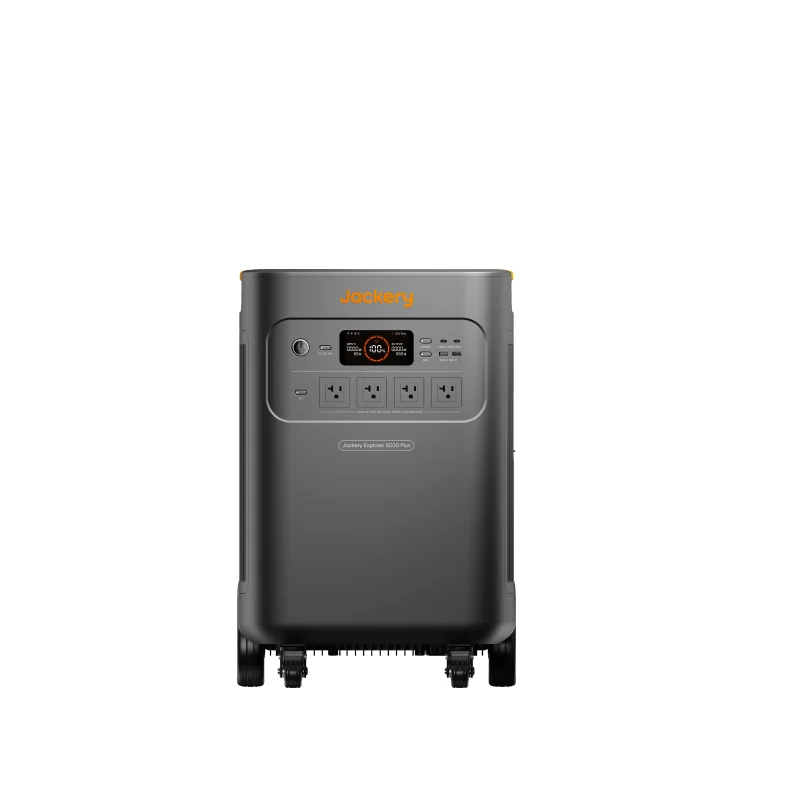
Jackery Explorer 5000 Plus review. 5,040Wh LiFePO4 with 7,200W 120V/240V output, 0ms UPS, 4,000W solar, expandable to 30kWh (60kWh with two units). Whole-home backup that runs dryers and EVs.
5,040Wh of LiFePO4 with 7,200W of 120V/240V dual output, 0ms online UPS, 4,000W solar input, and expandability to 30kWh per unit (60kWh with two units). Native 240V output for dryers and EV chargers.
Our Score
Buy the Jackery Explorer 5000 Plus
Typical prices · Check the retailer for today's price
Independent, unsponsored reviews built from specs, manuals, and owner reports. We may earn a commission at no extra cost to you.
How we score →5,040Wh of LiFePO4 with 7,200W of 120V/240V dual output, 0ms online UPS, 4,000W solar input, and expandability to 30kWh per unit (60kWh with two units). Native 240V output for dryers and EV chargers.
✓ What We Liked
- Native 240V output (NEMA L14-30R / 14-50) for dryers, well pumps and EV charging within the 7,200W limit
- 0ms Online UPS mode (plus <20ms Backup UPS) — true UPS for servers, medical, never drops
- 4,000W solar input with high-voltage PV (135-450V, 15A max) accepts rooftop array strings
- Expandable to 30kWh with up to 5 battery packs (60kWh with two units and 10 packs)
- The Double Kit pairs the unit with one battery pack for 10kWh
- 5-year warranty
✗ What We Didn't
- 134.5 lbs — fixed install only; not portable
- MSRP $4,299 is real money even at $2,879 sale
- Expansion packs add substantial cost per 5,040Wh
- Solar 240V/EV-charging features are overkill if you just need home-essentials backup
- 3.5-hour AC recharge is slower per-Wh than smaller Jackery Plus units
I have not tested this unit. This review is built from manufacturer specs and published manuals.
The Explorer 5000 Plus is the unit Jackery built when they decided to compete with whole-home battery installs rather than camping power stations. At 5,040Wh capacity, 7,200W of 120V/240V dual output, and expandability to 60kWh across a doubled configuration, it’s not in the same conversation as the rest of the Explorer line. It’s competing with the EcoFlow Delta Pro Ultra, the Anker SOLIX F3800, and entry-tier Tesla Powerwall installs.
For most people, this is too much station. For the right use case — off-grid cabin, frequent multi-day grid outages, EV charging during emergencies, or running 240V appliances during a planned shutdown — it’s the most complete consumer-tier option on the market.
What 240V Output Actually Means
The 5000 Plus has native 240V output through a NEMA L14-30R / 14-50 outlet. This is the meaningful spec, because 240V is what powers:
- Electric dryers
- EV chargers (Level 2, within the 7,200W limit)
- Well pumps
A 120V-only unit will not start any of these. The 5000 Plus has the 240V outlet for them, but check each appliance’s running and startup watts against the rating.
The 7,200W maximum output is shared across all outlets, and the 14,400W surge rating covers motor startup on many household loads. Add up running and startup watts before you plug in.
The 0ms Online UPS
This is the spec I think gets undersold. The 5000 Plus has two UPS modes:
- Backup UPS: under-20ms switchover. Fine for routers, modems, NAS, most desktop computers.
- Online UPS: 0ms switchover. The grid feeds the battery, the battery feeds the load. No switchover at all. Right for medical equipment, server racks, anything where even a 5ms blip causes a reboot.
Most consumer-tier “UPS” products are line-interactive at best (20-30ms switchover). True online UPS at this price tier is unusual. For anyone running a home server stack, a medical device, or a workshop with sensitive electronics, the online mode is the buying reason.
Estimated Runtime at 5,040Wh
These are calculated from 5,040Wh, assuming 85% inverter efficiency, which leaves about 4,280Wh on AC. The loads are examples:
- 200W average home essentials (fridge, freezer, modem, router, lights): about 21 hours per full charge
- 1.4kW Level 1 EV charging: about 3 hours per full base unit
With one Battery Pack 5000 Plus added (10kWh total), the 200W example stretches to about 43 hours on the same assumption. Going to 30kWh with five packs is overkill for almost anyone but covers a multi-day whole-home outage.
Solar Input: 4,000W with High-Voltage Strings
Jackery quotes 4,000W of solar input for this unit. Equally important, the unit accepts 135-450V solar input strings — meaning you can wire a rooftop array of typical residential panels (each ~40V Voc) in series, fed through a single MC4 input. Most portable solar inputs cap out at 60-75V and require parallel-wired portable panels.
If you already have panels or plan to add some, check the string’s total open-circuit voltage against the 450V ceiling and the 15A current limit before wiring anything up.
The Honest Limitations
134.5 pounds. This is a fixed-install unit. The integrated wheels help move it across a smooth floor but you’re not lifting it up stairs without a helper.
$2,879 sale price is real money. MSRP is $4,299. Wait for sales. Even at $2,879 it costs about four times the UDPOWER S2400. The premium buys 240V output, the online UPS, the solar input ceiling, and the expandability.
3.5-hour AC recharge. This is slower per-watt-hour than the smaller Plus units. With the included adapter, expect ~3.5 hours from empty to full. For most home backup scenarios you’ll be on solar or trickle-charging from a generator, so this matters less than the spec suggests.
Expansion pack pricing. Each Battery Pack 5000 Plus adds another 5,040Wh at a real cost, so price the full configuration before committing. Jackery lists up to five packs per unit (30kWh); 60kWh needs two units and ten packs.
Overkill for renters. If you don’t own your home, the 5000 Plus integrates with too few situations to justify the price. The 2000 Plus is the right pick.
Who Should Buy It
Buy it if you own your home, you need 240V output for any single load (dryer, EV charger, well pump, central AC), you have an existing rooftop solar array you want to integrate without a hybrid inverter, you need true 0ms online UPS, or you’re stacking this for genuine whole-home backup.
Skip it if you’re a renter, you only need 120V loads (the 2000 Plus is the smaller option), or your outage events are 6 hours or less (a 2kWh unit covers that for less than half the spend).
The Bottom Line
The 5000 Plus is the most complete consumer-tier home backup unit Jackery sells, and one of three credible 5kWh+ consumer units on the market alongside the EcoFlow Delta Pro Ultra and Anker SOLIX F3800. The 240V output, online UPS, and high-voltage solar input together make a coherent argument for the premium price. At $2,879 on sale, compare it against current F3800 and Delta Pro Ultra pricing before you buy.
For most readers this is too much station. For the use cases listed above, it’s the right one.
Shop
Ready to buy the Jackery Explorer 5000 Plus?
Check the latest price and availability.
Check Price on Jackery