Renogy 200W 12V Monocrystalline Solar Panel vs UDPOWER 210W Solar Panel
Renogy 200W 12V Monocrystalline Solar Panel vs UDPOWER 210W Solar Panel compared spec-by-spec. Rated output, efficiency, pricing, pros, cons, and our verdict on which solar panel to buy.
| Specification | A — renogy Renogy 200W 12V Monocrystalline Solar Panel 9.0/10 $170 Check Price on Renogy $200
Save $30 | |
|---|---|---|
| Wattage | 200 | 210 |
| Panel Type | monocrystalline | monocrystalline |
| Efficiency Pct | 19.2 | 22 |
| Weight | 26.5 lbs | 15.32 lbs ✓ Winner |
| Dimensions | 58.7 x 27.5 x 1.4 in | 86.22 x 23.66 x 0.14 in (unfolded) |
| Connector Type | MC4 | Designed for UDPOWER stations (DC7909 input); connectors in box not published |
| Ip Rating | IP65 | IP65 |
| Warranty | 10 years ✓ Winner | 1 years |
| Foldable | No | Yes |
| Voc | 23 | 48 |
| Isc | 11.05 | 5.4 |
| Vmp | 19.2 | 40 |
| Imp | 10.42 | 5 |
| Operating Temp | -40 to 185F | -40 to 185F |
| Cells | monocrystalline | — |
| Frame | corrosion-resistant aluminum | — |
| Folded Dimensions | — | 23.66 x 23.15 x 0.79 in |
| Kickstand | — | Yes |
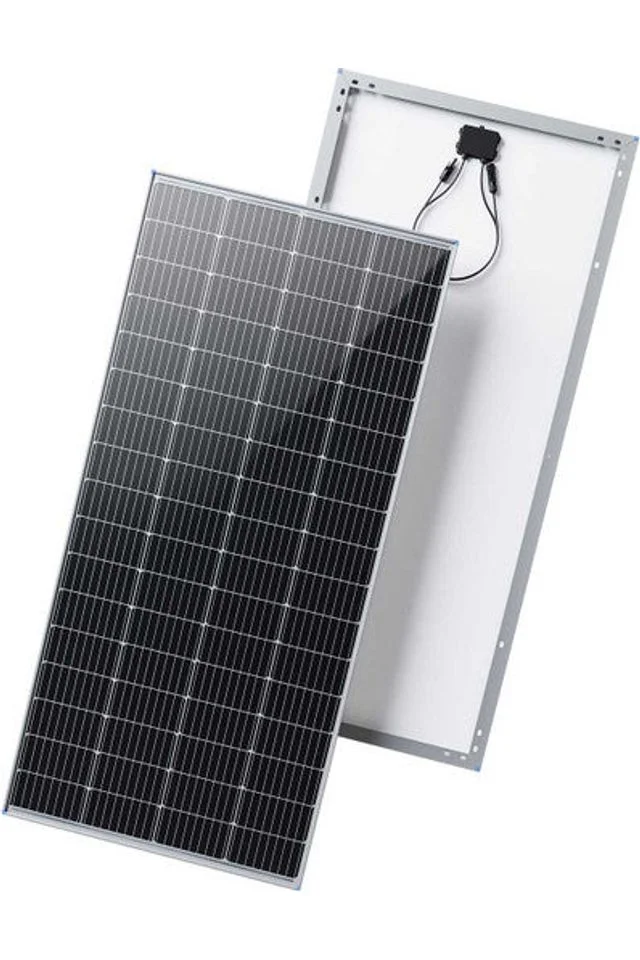
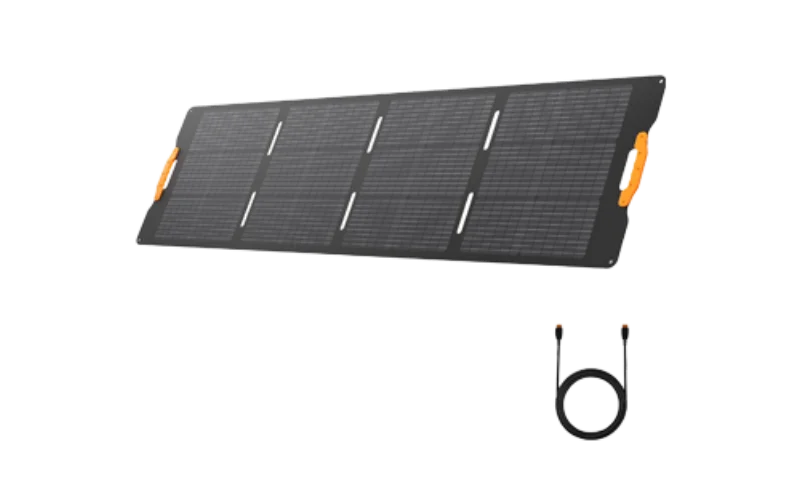
Buy the Renogy 200W 12V Monocrystalline Solar Panel
Typical prices · Check the retailer for today's price
Buy the UDPOWER 210W Solar Panel
Typical prices · Check the retailer for today's price
Who Should Buy the Renogy 200W 12V Monocrystalline Solar Panel?
The Renogy 200W 12V Monocrystalline Solar Panel is the right fit for off grid cabin, rv roof mount, diy solar system. At 200W with 19.2% efficiency, it delivers solid output for portable and rooftop arrays.
Key advantages include: best value per watt in the rigid panel market; 10-year material warranty with 25-year power output warranty; pre-drilled mounting holes for quick installation. At 26.5 lbs, it's a fixed-mount panel best installed once and left in place.
At $170 ($0.85/W), the Renogy 200W 12V Monocrystalline Solar Panel scores 9/10 — among the best-performing panels in our benchmark.
Who Should Buy the UDPOWER 210W Solar Panel?
The UDPOWER 210W Solar Panel is the right fit for car camping, emergency preparedness, portable power stations. At 210W with 22% efficiency, it delivers solid output for portable and rooftop arrays.
Key advantages include: 210w is enough to use a meaningful share of the s1200's 400w solar input; adjustable 60-90 degree stand; tuv certified. At 15.32 lbs, it's a fixed-mount panel best installed once and left in place.
At $300 ($1.43/W), the UDPOWER 210W Solar Panel scores 8.4/10 — a strong all-around performer.
How Do the Specs Compare?
Wattage: The UDPOWER 210W Solar Panel puts out more power at 210W versus 200W for the Renogy 200W 12V Monocrystalline Solar Panel. Higher wattage means faster charging and more energy harvested per square foot of roof or ground space — a priority for larger systems.
Efficiency: The UDPOWER 210W Solar Panel converts more sunlight to power at 22% efficiency versus 19.2% for the Renogy 200W 12V Monocrystalline Solar Panel. The efficiency difference is small — real-world output will depend more on placement angle and shading than on this gap.
Weight: The UDPOWER 210W Solar Panel weighs 15.32 lbs versus 26.5 lbs for the Renogy 200W 12V Monocrystalline Solar Panel. For portable use, that weight difference is noticeable — lighter panels are easier to reposition as the sun moves.
Cost per watt: The Renogy 200W 12V Monocrystalline Solar Panel offers better value at $0.85/W versus $1.43/W. Cost-per-watt is the most useful metric for comparing solar panels at different wattage levels.
Price: The Renogy 200W 12V Monocrystalline Solar Panel costs $170 versus $300 for the UDPOWER 210W Solar Panel — a $130 difference. When scaling to a multi-panel system, that per-panel cost difference compounds quickly.
🏆 Our Verdict
Choose the Renogy 200W 12V Monocrystalline Solar Panel if you need higher performance and top-tier efficiency.
Choose the UDPOWER 210W Solar Panel if you prioritize premium features and build quality , portability (15.32 lbs vs 26.5 lbs).
Related
Go Deeper
Best For
These products target different use cases — check each review for specifics.
How we scoreMore Comparisons