AquaTru Under Sink Reverse Osmosis vs MSR Guardian Water Purifier
AquaTru Under Sink Reverse Osmosis vs MSR Guardian Water Purifier compared spec-by-spec. Filtration performance, flow rate, pricing, pros, cons, and our verdict on which water filter to buy.
| Specification | A — aquatru AquaTru Under Sink Reverse Osmosis 8.5/10 $395
Price unavailable
| |
|---|---|---|
| Filter Type | under-sink reverse osmosis | pump purifier |
| Contaminants Removed | PFAS, plus 84 total certified contaminants | bacteria, protozoa, viruses, sediment, microplastics |
| Contaminants Certified Removed | 84 | — |
| Smart Leak Detection | Yes | — |
| Virus Removal | Yes | Yes |
| Weight Oz | — | 17.3 |
| Flow Rate | — | 2.5 L/min |
| Filter Life Gallons | — | 2,642 |
| Filter Life Liters | — | 10,000 |
| Pore Size | — | hollow fiber + medical-grade fiber |
| Requires Power | — | No |
| Self Cleaning | — | Yes |
| Pump Strokes Per Liter | — | 40 |
| Hose Length Inches | — | 36 |
| Operating Temp | — | above freezing |
| Meets Standard | — | NSF P248 military testing protocol |
Buy the AquaTru Under Sink Reverse Osmosis
Best prices · Updated hourly
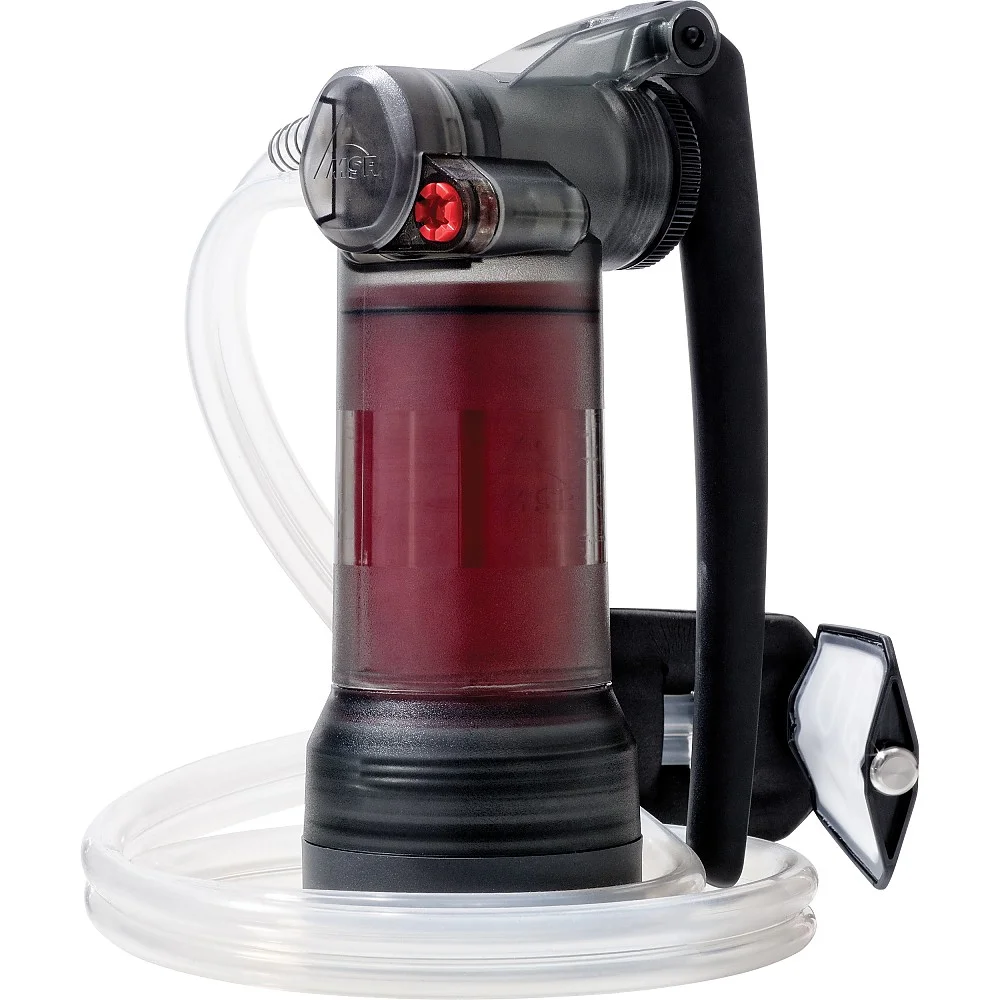
Buy the MSR Guardian Water Purifier
Best prices · Updated hourly
Who Should Buy the AquaTru Under Sink Reverse Osmosis?
The AquaTru Under Sink Reverse Osmosis is designed for well water off grid, family use, under sink reverse osmosis. As a under-sink reverse osmosis, it removes viruses, bacteria, and protozoa for true purification-level protection.
Key advantages include: reverse-osmosis membrane certified to remove 84 contaminants, including pfas; under-sink install keeps the counter clear versus the countertop aquatru; smart leak detection guards against under-cabinet water damage.
Priced at $395, the AquaTru Under Sink Reverse Osmosis scores 8.5/10 in our testing — an excellent performer across our key metrics.
Who Should Buy the MSR Guardian Water Purifier?
The MSR Guardian Water Purifier is designed for emergency preparedness. As a pump purifier, it removes viruses, bacteria, and protozoa for true purification-level protection.
Key advantages include: true purifier — meets nsf p248 military protocol for virus, bacteria, and protozoa; self-cleaning mechanism prevents clogging during pumping; 10,000-liter cartridge life with no maintenance required. At 17.3 oz, it's better suited for basecamp or vehicle-based use.
Priced at $325, the MSR Guardian Water Purifier scores 9.1/10 in our testing — one of the highest-rated filters we have tested.
How Do the Specs Compare?
Filter type: The AquaTru Under Sink Reverse Osmosis is a under-sink reverse osmosis while the MSR Guardian Water Purifier is a pump purifier. Different filter types suit different scenarios — consider your primary use case when choosing between them.
Filtration performance: The MSR Guardian Water Purifier scores higher on filtration at 9.8/10 versus 9.5/10 for the AquaTru Under Sink Reverse Osmosis. Both provide reliable protection for their intended use cases.
Price: The MSR Guardian Water Purifier costs $325 versus $395 for the AquaTru Under Sink Reverse Osmosis — a $70 difference. At this price parity, the decision comes down to filtration scope and use case fit.
🏆 Our Verdict
Choose the AquaTru Under Sink Reverse Osmosis if you need a reliable and proven filtration solution and premium build quality and features.
Choose the MSR Guardian Water Purifier if you prioritize value (typically $70 less) .
Related
Go Deeper
Best For
These products target different use cases — check each review for specifics.
How we test & scoreMore Comparisons